
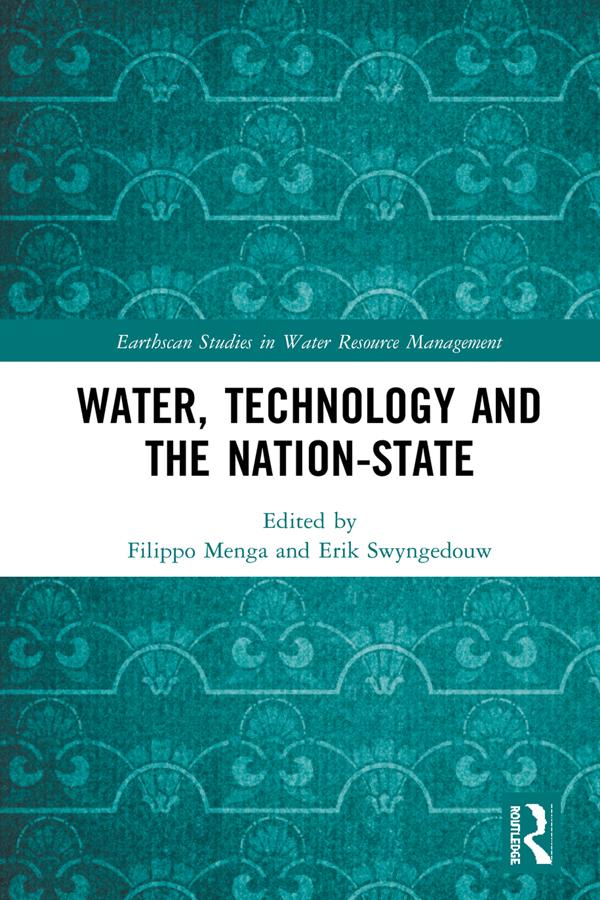
Just as space, territory and society can be socially and politically co-constructed, so can water, and thus the construction of hydraulic infrastructures can be mobilised by politicians to consolidate their grip on power while nurturing their own vision of what the nation is or should become. This book delves into the complex and often hidden connection between water, technological advancement and the nation-state, addressing two major questions. First, the arguments deployed consider how water as a resource can be ideologically constructed, imagined and framed to create and reinforce a national identity, and secondly, how the idea of a nation-state can and is materially co-constituted out of the material infrastructure through which water is harnessed and channelled.
The book consists of 13 theoretical and empirical interdisciplinary chapters covering four continents. The case studies cover a diverse range of geographical areas and countries, including China, Cyprus, Egypt, Ethiopia, France, Nepal and Thailand, and together illustrate that the meaning and rationale behind water infrastructures goes well beyond the control and regulation of water resources, as it becomes central in the unfolding of power dynamics across time and space.
Betaal eenvoudig met kaart, Klarna, Apple Pay of Google Pay. Niet tevreden? Je hebt altijd 14 dagen bedenktijd. Lees meer in onze voorwaarden. Heb je vragen, mail ons dan via hello@memmo.org.
Memmo maakt studeren makkelijker – waar je ook bent ter wereld. Wij brengen je cursusboeken en slimme studietools samen op één plek: samenvattingen, quizzen, podcasts en flashcards. En Ted, je studievriend die antwoord geeft op alles wat je je afvraagt. Meer dan 50.000 studenten studeren hier al – gebouwd om je sneller te laten leren en minder stress te geven.