
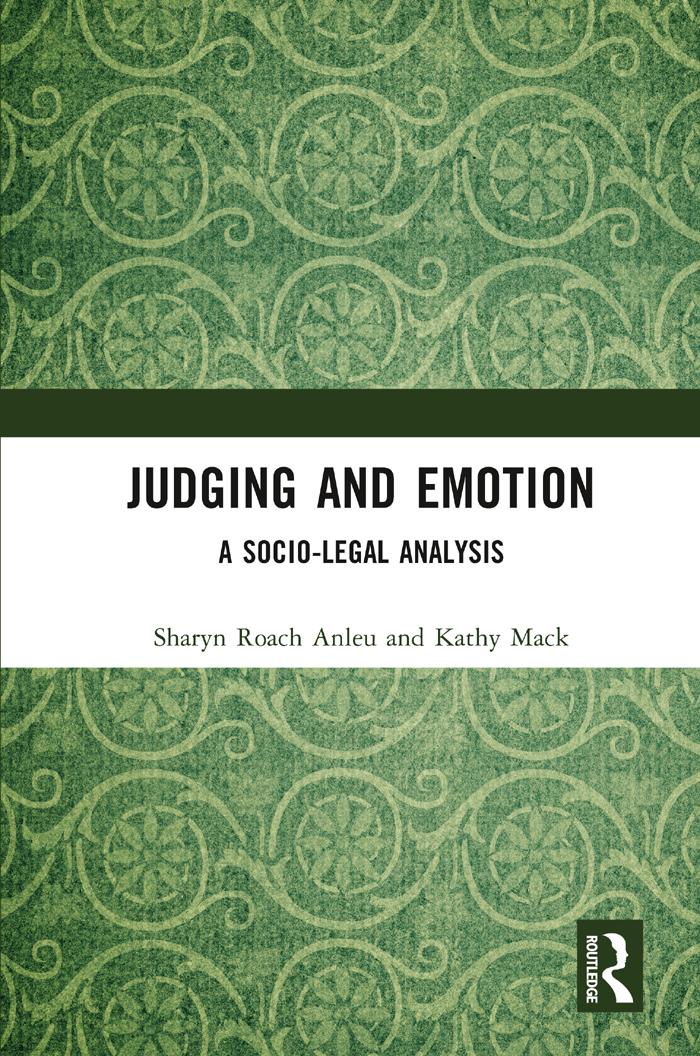
Judging and Emotion investigates how judicial officers understand, experience, display, manage and deploy emotions in their everyday work, in light of their fundamental commitment to impartiality.
Judging and Emotion challenges the conventional assumption that emotion is inherently unpredictable, stressful or a personal quality inconsistent with impartiality. Extensive empirical research with Australian judicial officers demonstrates the ways emotion, emotional capacities and emotion work are integral to judicial practice. Judging and Emotion articulates a broader conception of emotion, as a social practice emerging from interaction, and demonstrates how judicial officers undertake emotion work and use emotion as a resource to achieve impartiality. A key insight is that institutional requirements, including conceptions of impartiality as dispassion, do not completely determine the emotion dimensions of judicial work. Through their everyday work, judicial officers construct and maintain the boundaries of an impartial judicial role which necessarily incorporates emotion and emotion work.
Building on a growing interest in emotion in law and social sciences, this book will be of considerable importance to socio-legal scholars, sociologists, the judiciary, legal practitioners and all users of the courts.
Betaal eenvoudig met kaart, Klarna, Apple Pay of Google Pay. Niet tevreden? Je hebt altijd 14 dagen bedenktijd. Lees meer in onze voorwaarden. Heb je vragen, mail ons dan via hello@memmo.org.
Memmo maakt studeren makkelijker – waar je ook bent ter wereld. Wij brengen je cursusboeken en slimme studietools samen op één plek: samenvattingen, quizzen, podcasts en flashcards. En Ted, je studievriend die antwoord geeft op alles wat je je afvraagt. Meer dan 50.000 studenten studeren hier al – gebouwd om je sneller te laten leren en minder stress te geven.