
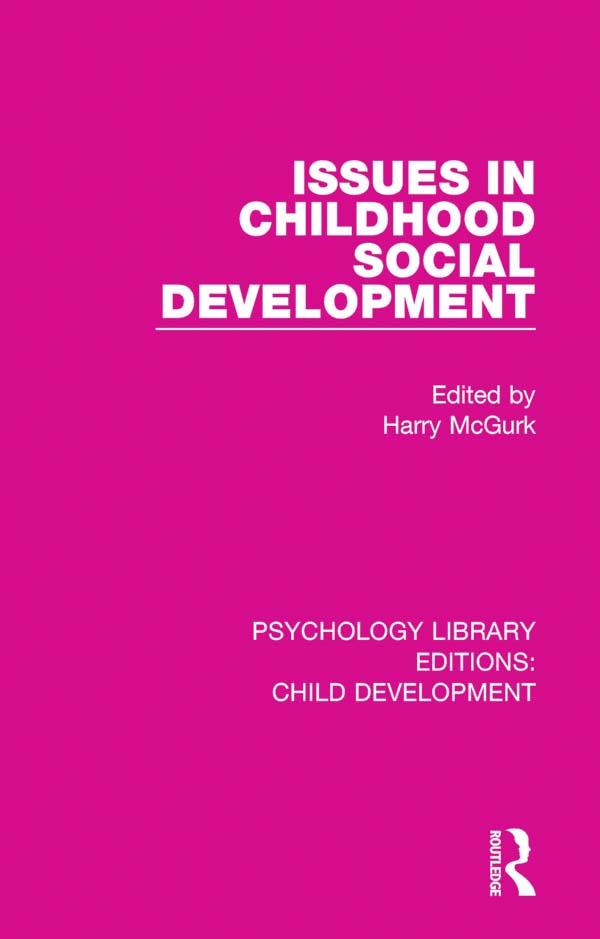
Originally published in 1978, contemporary theory and research into childhood social development had demonstrated the necessity to re-appraise the notion that socialization is merely a process of shaping the behaviour of the child to fit the mores of society. It was now evident that, from the beginnings of post-partum life, the human infant is an active participant in social encounters, modifying the behaviour of others as well as being influenced by them. Hence, social development must be construed as an interactive process, to which the young organism makes his own dynamic contribution. This book, comprising a collection of original essays by prominent investigators in the field, considers issues arising from this modified perspective. It examines the biological basis of social development, the role of child-caretaker interaction, the significance of sex differences, the influence of peer relations and the perceptual-cognitive factors which contribute to childhood social development and to the developing child’s understanding of society.
Betaal eenvoudig met kaart, Klarna, Apple Pay of Google Pay. Niet tevreden? Je hebt altijd 14 dagen bedenktijd. Lees meer in onze voorwaarden. Heb je vragen, mail ons dan via hello@memmo.org.
Memmo maakt studeren makkelijker – waar je ook bent ter wereld. Wij brengen je cursusboeken en slimme studietools samen op één plek: samenvattingen, quizzen, podcasts en flashcards. En Ted, je studievriend die antwoord geeft op alles wat je je afvraagt. Meer dan 50.000 studenten studeren hier al – gebouwd om je sneller te laten leren en minder stress te geven.