
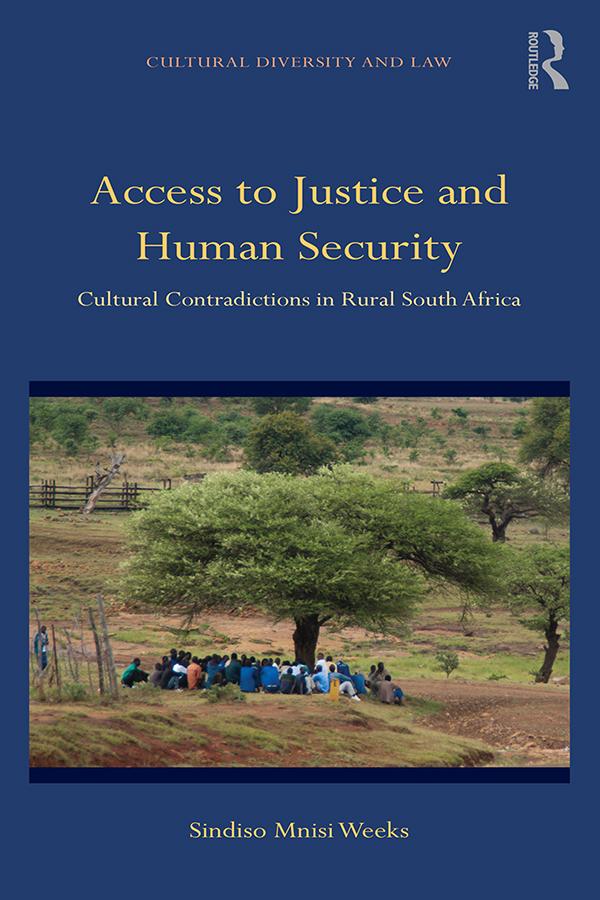
For most people in rural South Africa, traditional justice mechanisms provide the only feasible means of accessing any form of justice. These mechanisms are popularly associated with restorative justice, reconciliation and harmony in rural communities. Yet, this ethnographic study grounded in the political economy of rural South Africa reveals how historical conditions and contemporary pressures have strained these mechanisms’ ability to deliver the high normative ideals with which they are notionally linked. In places such as Msinga access to justice is made especially precarious by the reality that human insecurity – a composite of physical, social and material insecurity – is high for both ordinary people and the authorities who staff local justice forums; cooperation is low between traditional justice mechanisms and the criminal and social justice mechanisms the state is meant to provide; and competition from purportedly more effective ‘twilight institutions’, like vigilante associations, is rife. Further contradictions are presented by profoundly gendered social relations premised on delicate social trust that is closely monitored by one’s community and enforced through self-help measures like witchcraft accusations in a context in which violence is, culturally and practically, a highly plausible strategy for dispute management.
These contextual considerations compel us to ask what justice we can reasonably speak of access to in such an insecure context and what solutions are viable under such volatile human conditions? The book concludes with a vision for access to justice in rural South Africa that takes seriously ordinary people’s circumstances and traditional authorities’ lived experiences as documented in this detailed study. The author proposes a cooperative governance model that would maximise the resources and capacity of both traditional and state justice apparatus for delivering the legal and social justice – namely, peace and protection from violence as well as mitigation of poverty and destitution – that rural people genuinely need.
Betaal eenvoudig met kaart, Klarna, Apple Pay of Google Pay. Niet tevreden? Je hebt altijd 14 dagen bedenktijd. Lees meer in onze voorwaarden. Heb je vragen, mail ons dan via hello@memmo.org.
Memmo maakt studeren makkelijker – waar je ook bent ter wereld. Wij brengen je cursusboeken en slimme studietools samen op één plek: samenvattingen, quizzen, podcasts en flashcards. En Ted, je studievriend die antwoord geeft op alles wat je je afvraagt. Meer dan 50.000 studenten studeren hier al – gebouwd om je sneller te laten leren en minder stress te geven.