
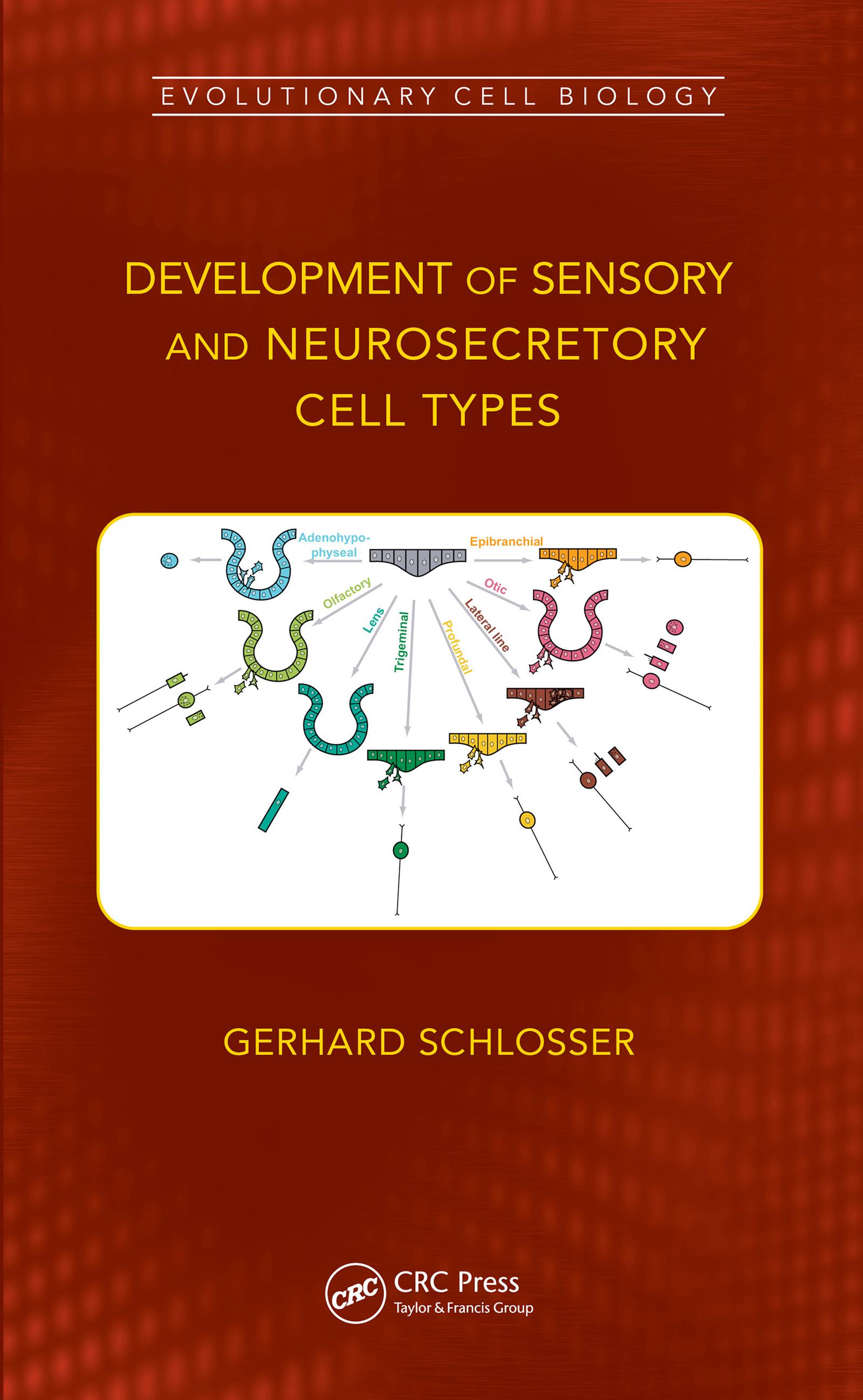
Most of the cranial sense organs of vertebrates arise from embryonic structures known as cranial placodes. Such placodes also give rise to sensory neurons that transmit information to the brain as well as to many neurosecretory cells. This book focuses on the development of sensory and neurosecretory cell types from cranial placodes by introducing the vertebrate head with its sense organs and neurosecretory organs and providing an overview of the various cranial placodes and their derivatives, including evidence of common embryonic primordia. Schlosser discusses how these primordia are established in the early embryo and how individual placodes develop. The latter chapters explain how various placodally derived sensory and neurosecretory cell types differentiate into discrete structures.
Betaal eenvoudig met kaart, Klarna, Apple Pay of Google Pay. Niet tevreden? Je hebt altijd 14 dagen bedenktijd. Lees meer in onze voorwaarden. Heb je vragen, mail ons dan via hello@memmo.org.
Memmo maakt studeren makkelijker – waar je ook bent ter wereld. Wij brengen je cursusboeken en slimme studietools samen op één plek: samenvattingen, quizzen, podcasts en flashcards. En Ted, je studievriend die antwoord geeft op alles wat je je afvraagt. Meer dan 50.000 studenten studeren hier al – gebouwd om je sneller te laten leren en minder stress te geven.