
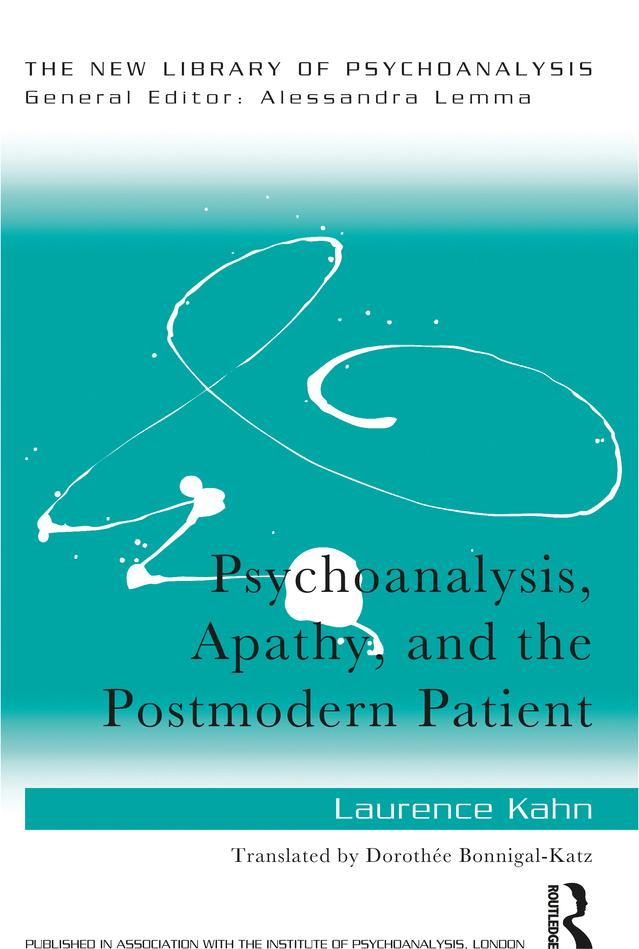
The postmodern turn underlies a new development in psychoanalysis, which has theoretical and practical implications. Psychoanalysis, Apathy, and the Postmodern Patient involves a detailed reading of the main psychoanalytic texts that mark out this extended development, along with a critical examination of the changes in the major Freudian concepts. At stake are the tenets of infantile sexuality, ‘psychic reality,’ unconscious determinism, the fulfilment of unconscious desire, and free association.
In this book, Laurence Kahn sets out a critique of postmodern psychoanalysis, via a theoretical and clinical discussion that tackles the place of metapsychology and the question of the scientific status of psychoanalysis. Starting from Freud’s own work, she considers such key topics as the analyst’s objectivity, the relevance of self-disclosure, the complex influence of French postmodern theorists, and the role of empathy in psychoanalytic technique. In so doing, she offers a perspective on psychoanalytic thought and practice that exposes the insidious taming of the Freudian model in favour of a 'humanistic' and 'dialogic' approach that obliterates the radical otherness of the unconscious.
Coming from a powerful voice in the contemporary French psychoanalytic tradition, Psychoanalysis, Apathy, and the Postmodern Patient is a bold celebration of psychoanalysis that will be of great interest to psychoanalysts and psychoanalytic psychotherapists, as well as philosophers and historians of thought.
Betaal eenvoudig met kaart, Klarna, Apple Pay of Google Pay. Niet tevreden? Je hebt altijd 14 dagen bedenktijd. Lees meer in onze voorwaarden. Heb je vragen, mail ons dan via hello@memmo.org.
Memmo maakt studeren makkelijker – waar je ook bent ter wereld. Wij brengen je cursusboeken en slimme studietools samen op één plek: samenvattingen, quizzen, podcasts en flashcards. En Ted, je studievriend die antwoord geeft op alles wat je je afvraagt. Meer dan 50.000 studenten studeren hier al – gebouwd om je sneller te laten leren en minder stress te geven.