
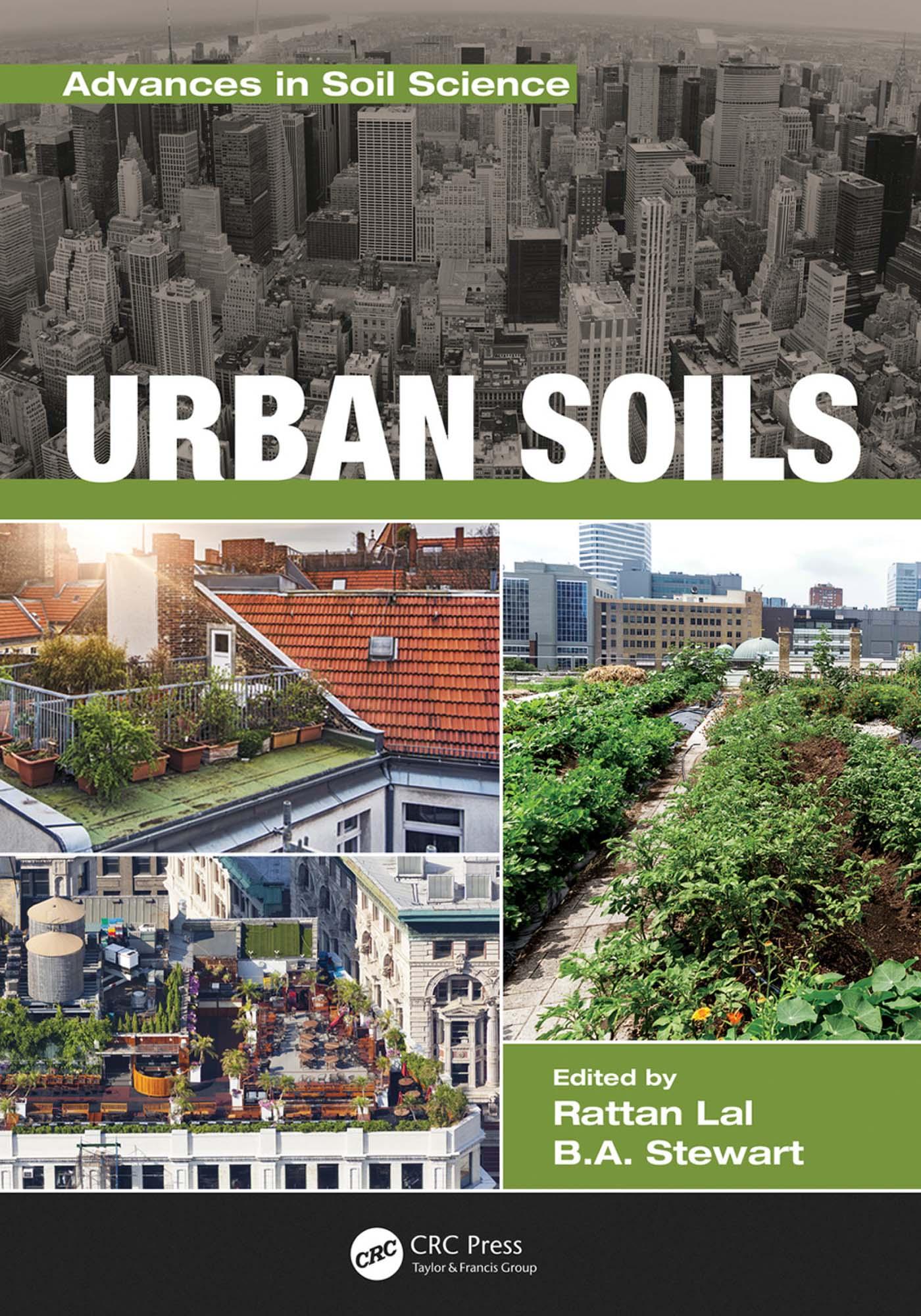
Globally, 30% of the world population lived in urban areas in 1950, 54% in 2016 and 66% projected by 2050. The most urbanized regions include North America, Latin America, and Europe. Urban encroachment depletes soil carbon and the aboveground biomass carbon pools, enhancing the flux of carbon from soil and vegetation into the atmosphere. Thus, urbanization has exacerbated ecological and environmental problems.
Urban soils are composed of geological material that has been drastically disturbed by anthropogenic activities and compromised their role in the production of food, aesthetics of residential areas, and pollutant dynamics. Properties of urban soils are normally not favorable to plant growth—the soils are contaminated by heavy metals and are compacted and sealed. Therefore, the quality of urban soils must be restored to make use of this valuable resource for delivery of essential ecosystem services (e.g., food, water and air quality, carbon sequestration, temperature moderation, biodiversity).
Part of the Advances in Soil Sciences Series, Urban Soils explains properties of urban soils; assesses the effects of urbanization on the cycling of carbon, nitrogen, and water and the impacts of management of urban soils, soil restoration, urban agriculture, and food security; evaluates ecosystem services provisioned by urban soils, and describes synthetic and artificial soils.
Betaal eenvoudig met kaart, Klarna, Apple Pay of Google Pay. Niet tevreden? Je hebt altijd 14 dagen bedenktijd. Lees meer in onze voorwaarden. Heb je vragen, mail ons dan via hello@memmo.org.
Memmo maakt studeren makkelijker – waar je ook bent ter wereld. Wij brengen je cursusboeken en slimme studietools samen op één plek: samenvattingen, quizzen, podcasts en flashcards. En Ted, je studievriend die antwoord geeft op alles wat je je afvraagt. Meer dan 50.000 studenten studeren hier al – gebouwd om je sneller te laten leren en minder stress te geven.