
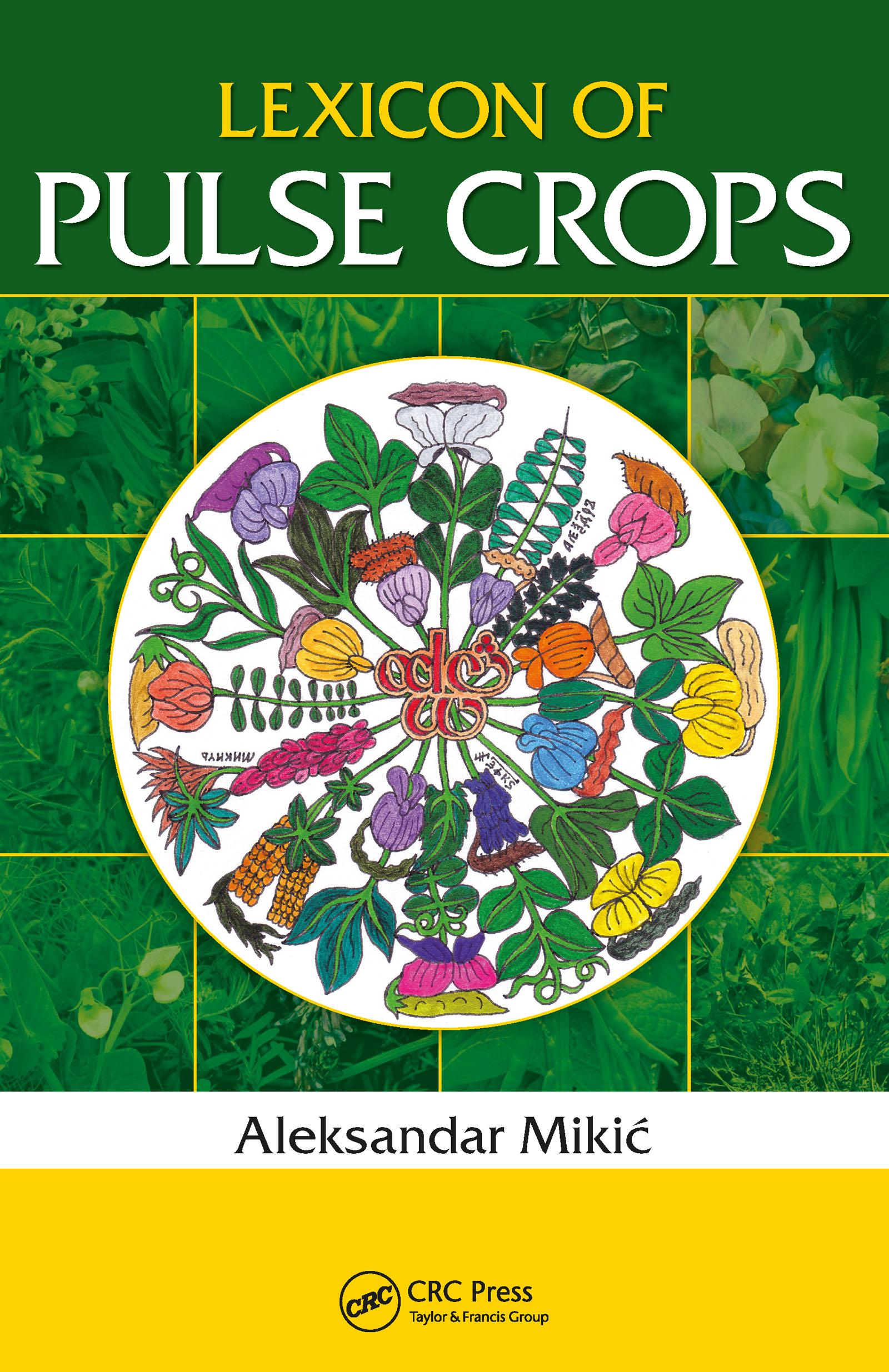
Lexicon of Pulse Crops integrates botanical and linguistic data to analyze and interpret the grain legume significance from the earliest archaeological and written records until the present day. Aimed at both agronomic and linguistic research communities, this book presents a database containing 9,500 common names in more than 900 languages and dialects of all ethnolinguistic families, denoting more than 1,100 botanical taxa of 14 selected pulse crop genera and species.
The book begins with overviews of the world’s economically most important grain legume crops and their uncultivated relatives, as well as the world’s language families with their inner structure, including both extinct and living members. The main section of the text presents 14 specialized book chapters covering Arachis, Cajanus, Cicer, Ervum, Faba, Glycine, Lablab, Lathyrus, Lens, Lupinus, Phaseolus, Pisum, Vicia, and Vigna. They provide the reader with extensive lists of the botanically accepted species and subtaxa and surveys lexicological abundance in all world’s ethnolinguistic families, comprising extinct and living as well as natural and constructed languages, while the vernacular names for the most significant taxa are presented in comprehensive tables. Each of these chapters also presents the existing etymologies and novel approaches to deciphering the origins of common names, accompanied by one original color plate depicting possible root evolutions in the form of corresponding pulse crop plants.
Betaal eenvoudig met kaart, Klarna, Apple Pay of Google Pay. Niet tevreden? Je hebt altijd 14 dagen bedenktijd. Lees meer in onze voorwaarden. Heb je vragen, mail ons dan via hello@memmo.org.
Memmo maakt studeren makkelijker – waar je ook bent ter wereld. Wij brengen je cursusboeken en slimme studietools samen op één plek: samenvattingen, quizzen, podcasts en flashcards. En Ted, je studievriend die antwoord geeft op alles wat je je afvraagt. Meer dan 50.000 studenten studeren hier al – gebouwd om je sneller te laten leren en minder stress te geven.