
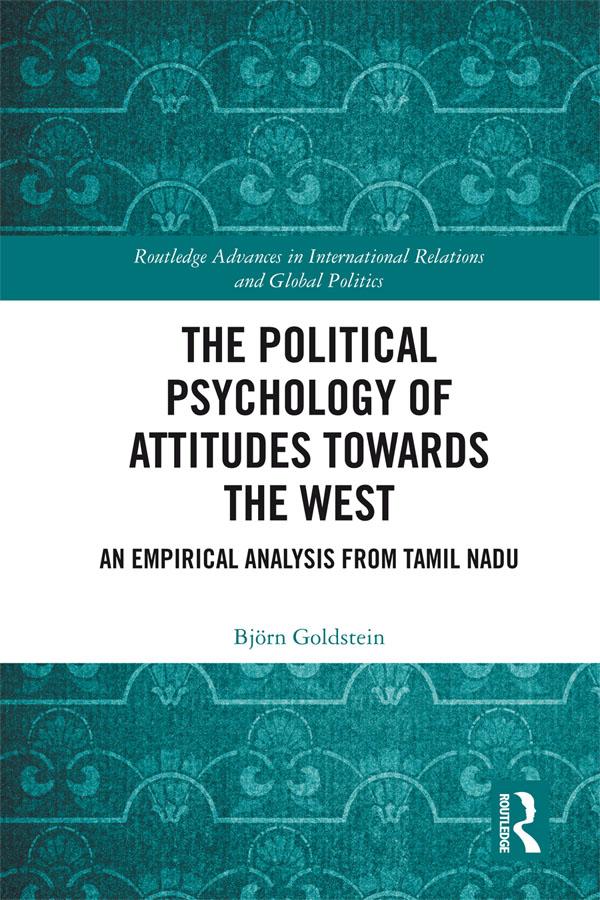
Why do some individuals from the imagined "non-West" view the "West" favorably and others do not?
Grounded in psychological authoritarianism and the psychological reactions to experiences of rejection, Björn Goldstein provides a theoretical model to explain and predict attitude toward the "West." Using accounts from high-ranking politicians from different socioeconomic groups in the Tamil Nadu region of India—a region independent from the often too "emotionalized" discourse regarding (political) Islam—Goldstein challenges the conventional narrative that the most important factors for attitude formation toward the West are experiences of disregard and oppression perpetrated by the West.
Far beyond the personal characteristics of individuals, differences in attitudes follow a regular pattern of variables influencing opinion and attitude formation toward the West in each society. Scoring high on authoritarianism predicts "anti-Western" attitudes far better than socio-economic status, cultural or moral concerns, or normative differences do.
Betaal eenvoudig met kaart, Klarna, Apple Pay of Google Pay. Niet tevreden? Je hebt altijd 14 dagen bedenktijd. Lees meer in onze voorwaarden. Heb je vragen, mail ons dan via hello@memmo.org.
Memmo maakt studeren makkelijker – waar je ook bent ter wereld. Wij brengen je cursusboeken en slimme studietools samen op één plek: samenvattingen, quizzen, podcasts en flashcards. En Ted, je studievriend die antwoord geeft op alles wat je je afvraagt. Meer dan 50.000 studenten studeren hier al – gebouwd om je sneller te laten leren en minder stress te geven.