
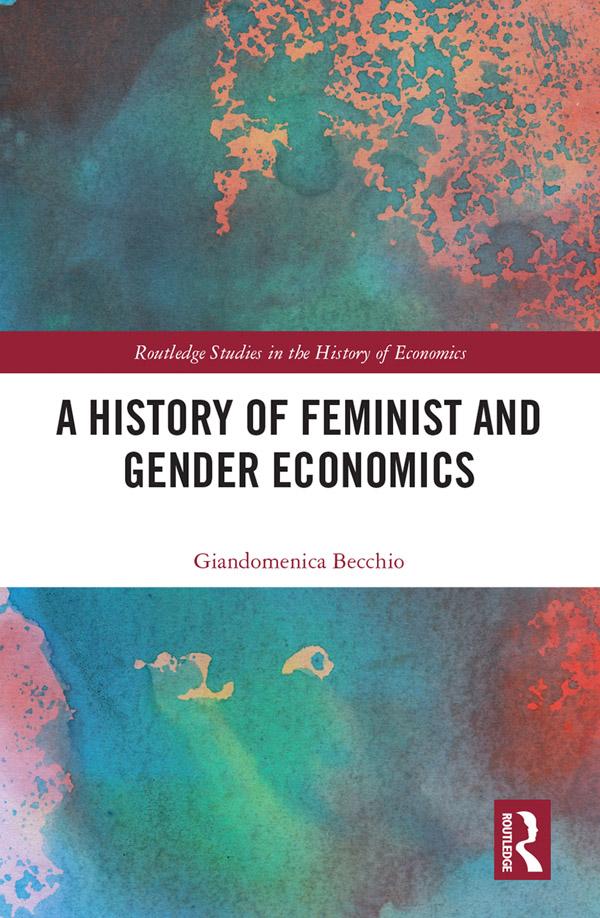
This book offers a historical exploration of the genesis of feminist economics and gender economics, as well as their theoretical and methodological differences. Its narrative also serves to embed both within a broader cultural context.
Although both feminist economics and gender neoclassical economics belong to the cultural process related to the central role of the political economy in promoting women’s emancipation and empowerment, they differ in many aspects. Feminist economics, mainly influenced by women’s studies and feminism, rejected neoclassical economics, while gender neoclassical economics, mainly influenced by home economics and the new home economics, adopted the neoclassical economics’ approach to gender issues. The book includes diverse case studies, which also highlight the continuity between the story of women’s emancipation and the more recent developments of feminist and gender studies.
This volume will be of great interest to researchers and academia in the fields of feminist economics, gender studies, and the history of economic thought.
Betaal eenvoudig met kaart, Klarna, Apple Pay of Google Pay. Niet tevreden? Je hebt altijd 14 dagen bedenktijd. Lees meer in onze voorwaarden. Heb je vragen, mail ons dan via hello@memmo.org.
Memmo maakt studeren makkelijker – waar je ook bent ter wereld. Wij brengen je cursusboeken en slimme studietools samen op één plek: samenvattingen, quizzen, podcasts en flashcards. En Ted, je studievriend die antwoord geeft op alles wat je je afvraagt. Meer dan 50.000 studenten studeren hier al – gebouwd om je sneller te laten leren en minder stress te geven.