
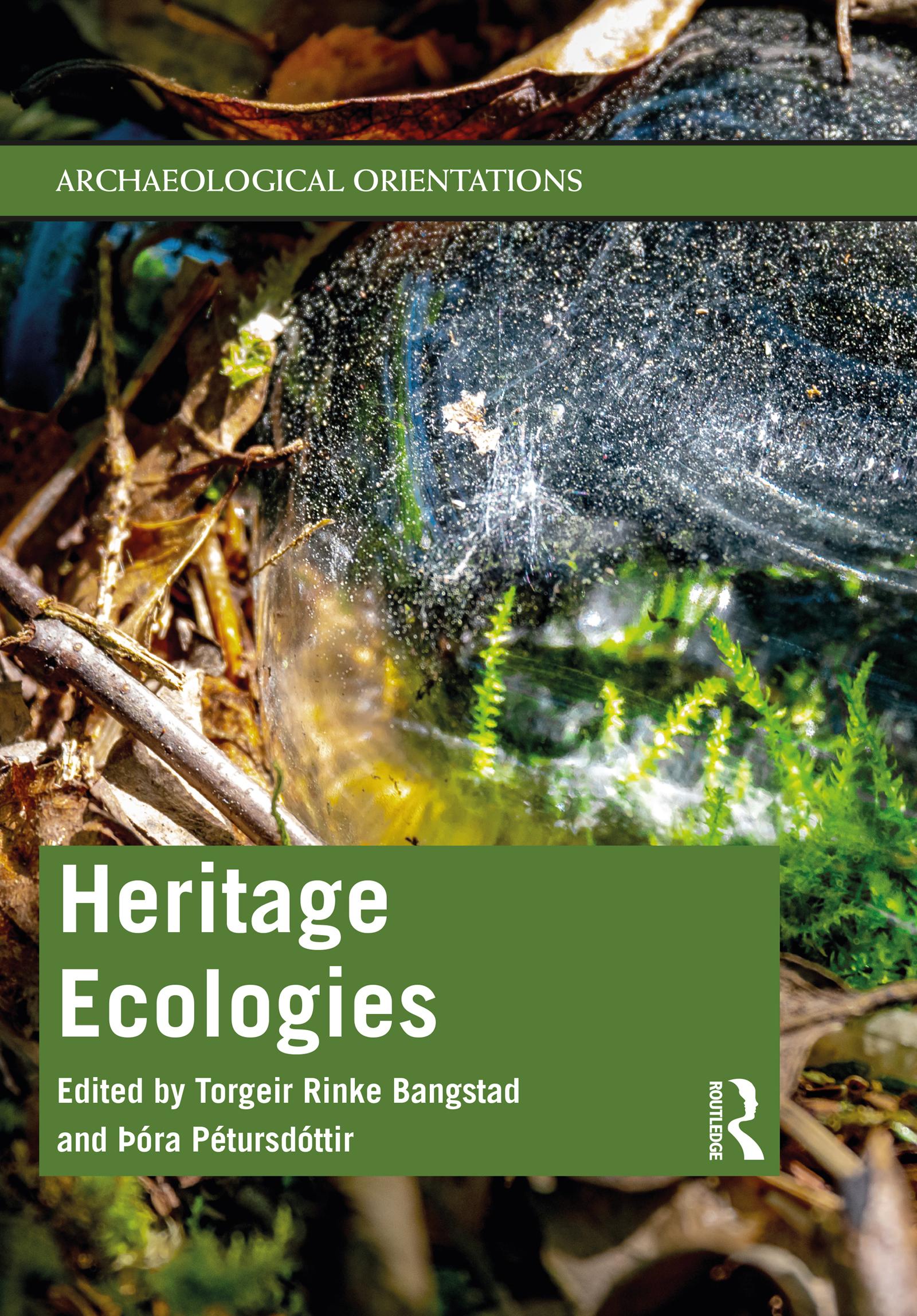
Heritage Ecologies presents an ecological understanding of heritage that furthers a concern for how its making and unmaking always involves a wide range of human and other-than-human actors.
Recognizing the entangled nature-cultures of heritage is essential in the Anthropocene era, where uncertainty and rapid environmental change force us to recast common conceptions of inheritance and to envision new strategies for preservation. Heritage sites are meant to be open and shared spaces, and a recurring argument in the cases presented here is that this openness inevitably also overrides our selections, orders and appreciations. Through a diverse range of case studies, the chapters collected in this book aim to explore the affects and memories engendered by diverse heritage ecologies where humans are neither the sole makers nor the only inheritors. The common call is that the experiential, perceptive and informational plenitude enabled through contributions of other-than-human actors is key to an ecological rethinking of heritage in the twenty-first century.
Heritage Ecologies is unique in bringing heritage studies into closer proximity with a wide variety of non-representational and object-oriented theories and is an important volume for students and researchers in archaeology and heritage studies.
Betaal eenvoudig met kaart, Klarna, Apple Pay of Google Pay. Niet tevreden? Je hebt altijd 14 dagen bedenktijd. Lees meer in onze voorwaarden. Heb je vragen, mail ons dan via hello@memmo.org.
Memmo maakt studeren makkelijker – waar je ook bent ter wereld. Wij brengen je cursusboeken en slimme studietools samen op één plek: samenvattingen, quizzen, podcasts en flashcards. En Ted, je studievriend die antwoord geeft op alles wat je je afvraagt. Meer dan 50.000 studenten studeren hier al – gebouwd om je sneller te laten leren en minder stress te geven.