
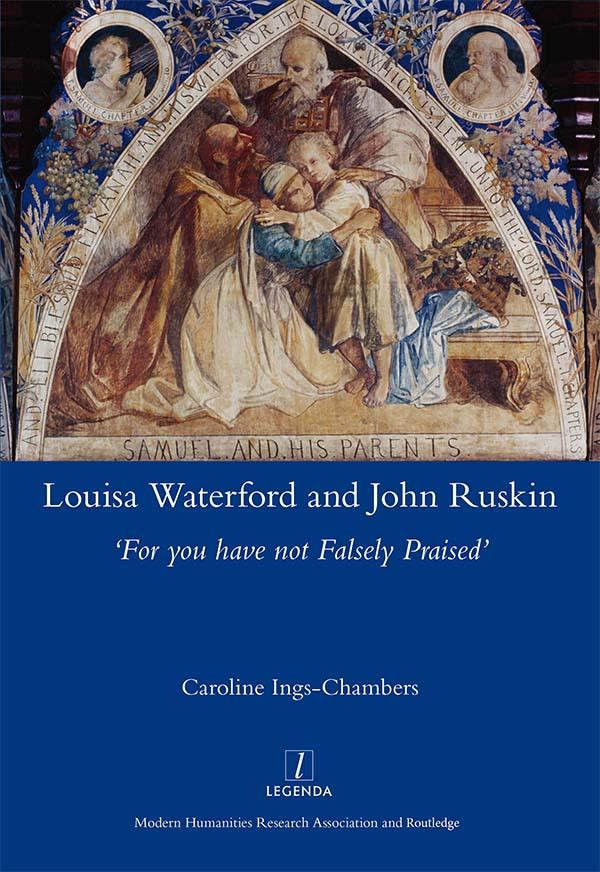
Louisa Waterford (1818-91), modest, retiring, of good family, renowned for her beauty, and with extraordinary grace, was the embodiment of a Victorian ideal of womanhood. But like the age itself, her life was filled with contrasts and paradoxes. She had been born with artistic gifts, and became a satellite of the Pre-Raphaelite Brotherhood, though she had no formal training. Then, at the height of John Ruskin's intellectual power and success as a critic, she asked him to accept her as an art student, and he accepted. Their correspondence- often harshly critical, never, as Waterford put it, falsely praising - lies at the heart of this book. These are letters which open a spectrum of discussion on the cultural, gender and social issues of the period. Both Waterford and Ruskin engaged in tireless philanthropic work for diverse causes, crossing social boundaries with subtle determination, and both responded to a sense of duty as well as an artistic vocation. But, as Ings-Chambers shows, their correspondence was more than a dialogue about society: it helped to make Waterford the artist she became.
Betaal eenvoudig met kaart, Klarna, Apple Pay of Google Pay. Niet tevreden? Je hebt altijd 14 dagen bedenktijd. Lees meer in onze voorwaarden. Heb je vragen, mail ons dan via hello@memmo.org.
Memmo maakt studeren makkelijker – waar je ook bent ter wereld. Wij brengen je cursusboeken en slimme studietools samen op één plek: samenvattingen, quizzen, podcasts en flashcards. En Ted, je studievriend die antwoord geeft op alles wat je je afvraagt. Meer dan 50.000 studenten studeren hier al – gebouwd om je sneller te laten leren en minder stress te geven.
Misschien vind je dit ook leuk
Koop het boek0