
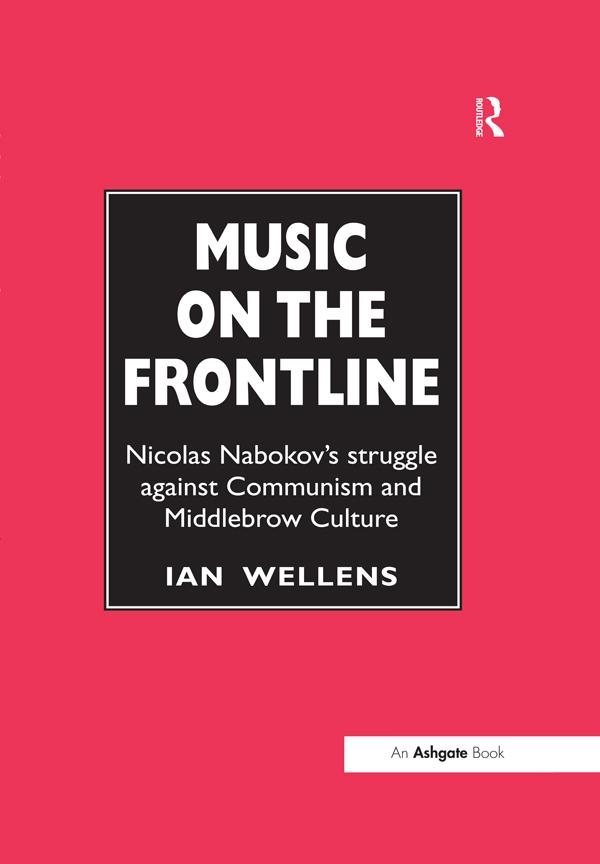
The story of Nicolas Nabokov's involvement with the CIA-funded Congress for Cultural Freedom (CCF) is a story of the politics and sociology of culture; how music was used for political ends and how intellectual groups formed and functioned during the Cold War. The seemingly independent CCF, established to counteract apparent Soviet successes in the fields of the arts and intellectual life, appointed Nabokov (a Russian emigre and minor composer) as its Secretary General in 1951.Over the next ten years he gave music a high profile in the work of the organisation, producing four international musical festivals, the first and most ambitious of which was 1952's L'Oeuvre du XXe siècle in Paris, an event which showcased the work of no less than 62 composers. As Ian Wellens reveals, Nabokov's musical involvement with the CCF was in fact a struggle on two fronts.Apparently a defence of Western modernism against 'backward', 'provincial' Soviet music, Nabokov's writings show this to have meshed closely with the domestic concern- shared by many intellectuals -that high culture was being undermined by an increasingly culturally aware middle class. His attacks on Soviet cultural policy, and his unflattering assessments of Shostakovich, are seen to be not merely salvos in the cold war but part of a broader campaign aimed at securing the authority and prestige of intellectuals.
Betaal eenvoudig met kaart, Klarna, Apple Pay of Google Pay. Niet tevreden? Je hebt altijd 14 dagen bedenktijd. Lees meer in onze voorwaarden. Heb je vragen, mail ons dan via hello@memmo.org.
Memmo maakt studeren makkelijker – waar je ook bent ter wereld. Wij brengen je cursusboeken en slimme studietools samen op één plek: samenvattingen, quizzen, podcasts en flashcards. En Ted, je studievriend die antwoord geeft op alles wat je je afvraagt. Meer dan 50.000 studenten studeren hier al – gebouwd om je sneller te laten leren en minder stress te geven.
Misschien vind je dit ook leuk
Koop het boek0