
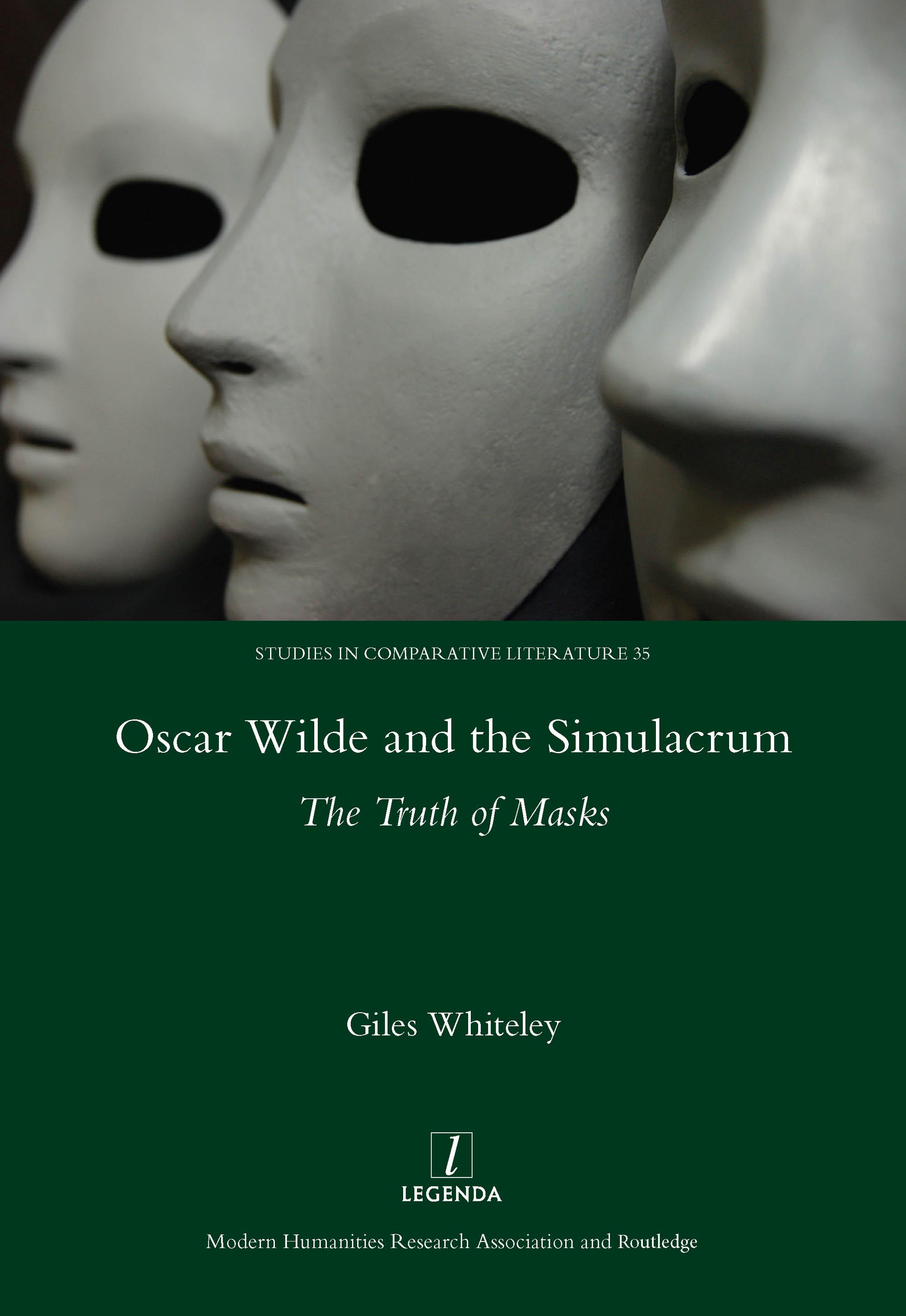
Oscar Wilde is more than a name, more than an author. From precocious Oxford undergraduate to cause celebre of the West End of the 1890s, to infamous criminal, the proper name Wilde has become an event in the history of literature and culture. Taking Wilde seriously as a philosopher in his own right, Whiteley's groundbreaking book places his texts into their philosophical context in order to show how Wilde broke from his peers, and in particular from idealism, and challenges recent neo-historicist readings of Wilde which seem content to limit his irruptive power. Using the paradoxical concept of the simulacrum to resituate Wilde's work in relation to both his precursors and his contemporaries, Whiteley's study reads Wilde through Deleuze and postmodern philosophical commentary on the simulacrum. In a series of striking juxtapositions, Whiteley challenges us to rethink both Oscar Wilde's aesthetics and his philosophy, to take seriously both the man and the mask. His philosophy of masks is revealed to figure a truth of a different kind - the simulacra through which Wilde begins to develop and formulate a mature philosophy that constitutes an ethics of joy.
Betaal eenvoudig met kaart, Klarna, Apple Pay of Google Pay. Niet tevreden? Je hebt altijd 14 dagen bedenktijd. Lees meer in onze voorwaarden. Heb je vragen, mail ons dan via hello@memmo.org.
Memmo maakt studeren makkelijker – waar je ook bent ter wereld. Wij brengen je cursusboeken en slimme studietools samen op één plek: samenvattingen, quizzen, podcasts en flashcards. En Ted, je studievriend die antwoord geeft op alles wat je je afvraagt. Meer dan 50.000 studenten studeren hier al – gebouwd om je sneller te laten leren en minder stress te geven.
Misschien vind je dit ook leuk
Koop het boek0