
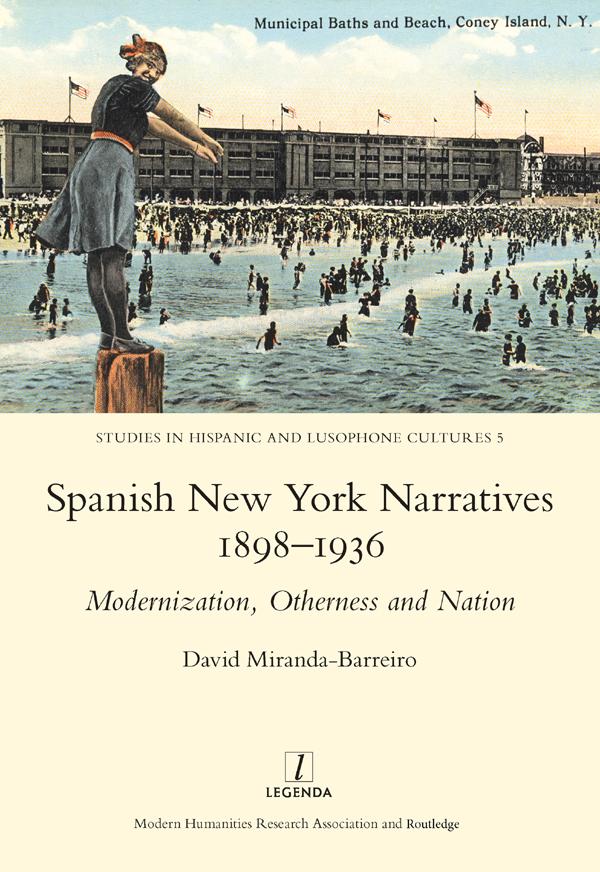
In the early decades of the twentieth century, New York caught the attention of Spanish writers. Many of them visited the city and returned to tell their experience in the form of a literary text. That is the case of Pruebas de Nueva York (1927) by Jose Moreno Villa (1887-1955), El crisol de las razas (1929) by Teresa de Escoriaza (1891-1968), Anticipolis (1931) by Luis de Oteyza (1883-1961) and La ciudad automatica (1932) by Julio Camba (1882-1962). In tune with similar representations in other European works, the image of New York given in these texts reflects the tensions and anxieties generated by the modernisation embodied by the United States. These authors project onto New York their concerns and expectations about issues of class, gender and ethnicity that were debated at the time, in the context of the crisis of Spanish national identity triggered by the end of the empire in 1898.
Betaal eenvoudig met kaart, Klarna, Apple Pay of Google Pay. Niet tevreden? Je hebt altijd 14 dagen bedenktijd. Lees meer in onze voorwaarden. Heb je vragen, mail ons dan via hello@memmo.org.
Memmo maakt studeren makkelijker – waar je ook bent ter wereld. Wij brengen je cursusboeken en slimme studietools samen op één plek: samenvattingen, quizzen, podcasts en flashcards. En Ted, je studievriend die antwoord geeft op alles wat je je afvraagt. Meer dan 50.000 studenten studeren hier al – gebouwd om je sneller te laten leren en minder stress te geven.
Misschien vind je dit ook leuk
Koop het boek0