
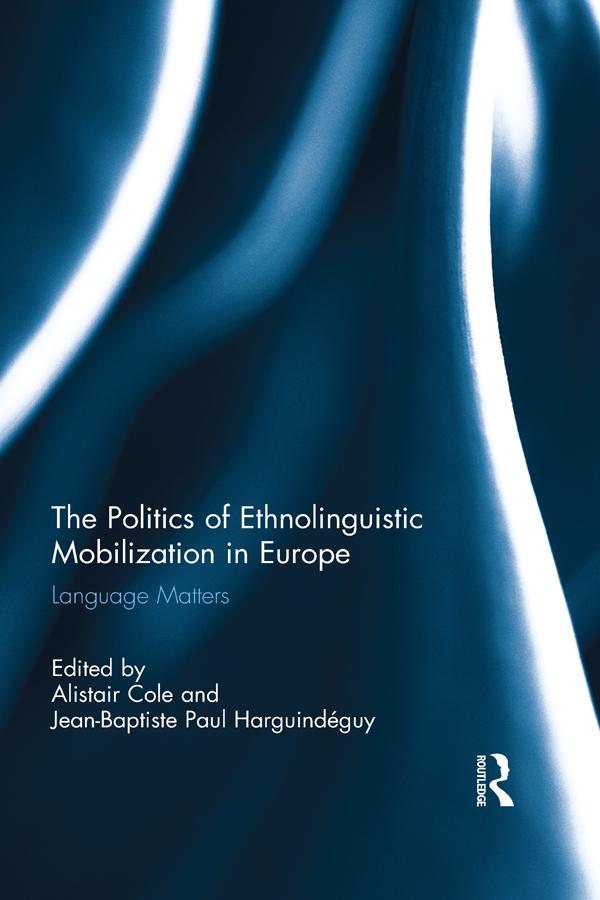
Language constitutes a very sensitive nexus between the concepts of territory and community. Though a fundamental issue in contemporary societies, it remains relatively unaddressed by political scientists. This book promotes a better understanding of the connection between the concepts of identity, territory and language in the context of an enlarged Europe. We propose a portrait of the actual place of regional languages in European politics. Ethno-linguistic mobilisations have occurred in very different contexts, and their interpretation needs to take into account varying configurations and conditions of success that we label as situational, institutional, and socio-political. The book combines empirical case studies drawn from Spain, the UK, Poland, France, Ireland and Canada with comparative, conceptual and theoretical insights into linguistic uniformity and diversity. The various chapters in the book go beyond description. The originality of the work is to bridge the institutionalisation of language regimes, the sociological analysis of languages rights’ movements, and the normative underpinnings that ought to underpin language claims.
This book was published as a special issue of Regional and Federal Studies.
Betaal eenvoudig met kaart, Klarna, Apple Pay of Google Pay. Niet tevreden? Je hebt altijd 14 dagen bedenktijd. Lees meer in onze voorwaarden. Heb je vragen, mail ons dan via hello@memmo.org.
Memmo maakt studeren makkelijker – waar je ook bent ter wereld. Wij brengen je cursusboeken en slimme studietools samen op één plek: samenvattingen, quizzen, podcasts en flashcards. En Ted, je studievriend die antwoord geeft op alles wat je je afvraagt. Meer dan 50.000 studenten studeren hier al – gebouwd om je sneller te laten leren en minder stress te geven.