
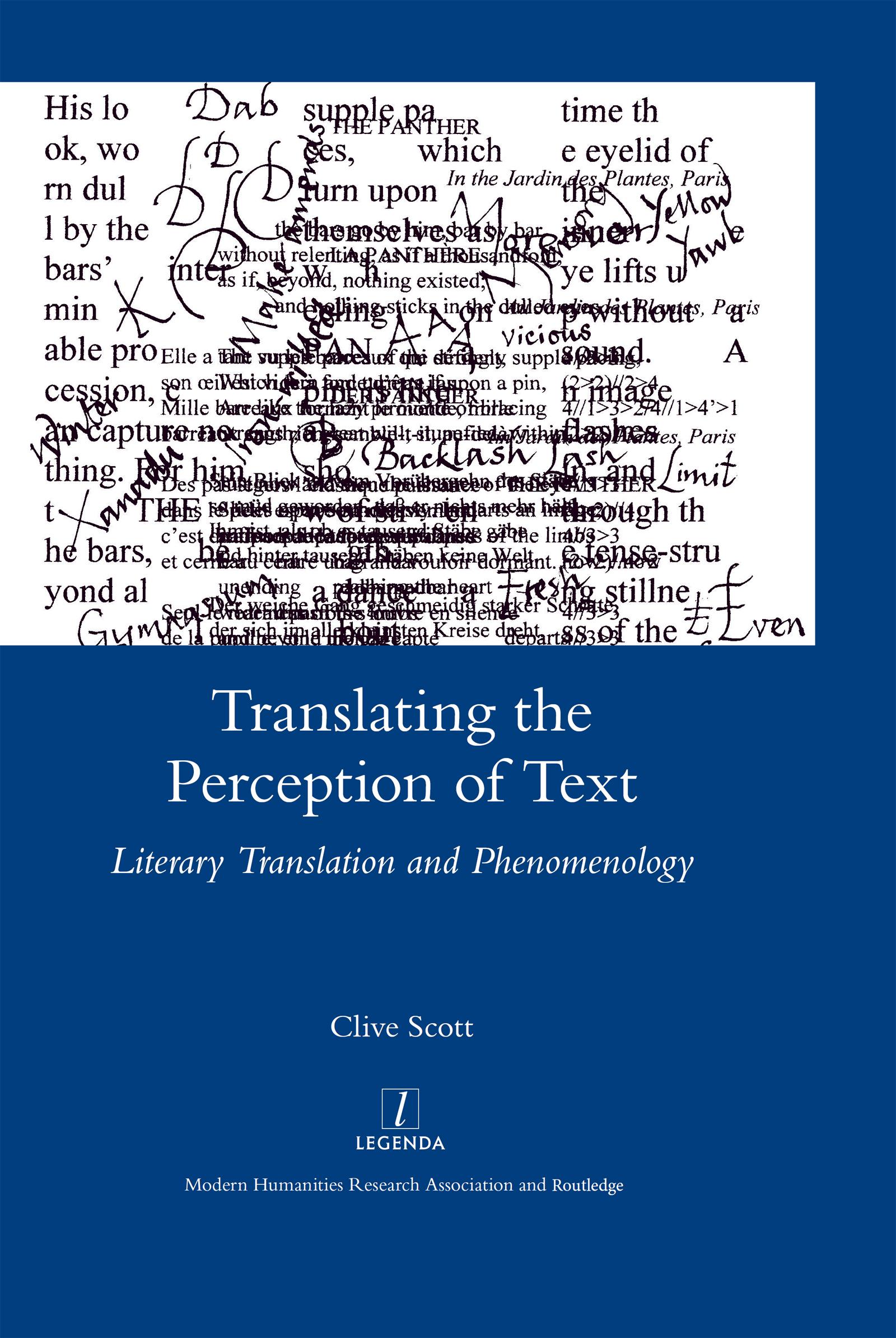
Translation often proceeds as if languages already existed, as if the task of the translator were to make an appropriate selection from available resources. Clive Scott challenges this tacit assumption. If the translator is to do justice to himself/herself as a reader, if the translator is to become the creative writer of his/her reading, then the language of translation must be equal to the translators perceptual experience of, and bodily responses to, source texts. Each renewal of perceptual and physiological contact with a text involves a renewal of the ways we think language and use our expressive faculties (listening, speaking, writing). Phenomenology and particularly the phenomenology of Merleau-Ponty underpins this new approach to translation. The task of the translator is tirelessly to develop new translational languages, ever to move beyond the bilingual into the multilingual, and always to remember that language is as much an active instrument of perception as an object of perception. Clive Scott is Professor Emeritus of European Literature at the University of East Anglia, and a Fellow of the British Academy.
Betaal eenvoudig met kaart, Klarna, Apple Pay of Google Pay. Niet tevreden? Je hebt altijd 14 dagen bedenktijd. Lees meer in onze voorwaarden. Heb je vragen, mail ons dan via hello@memmo.org.
Memmo maakt studeren makkelijker – waar je ook bent ter wereld. Wij brengen je cursusboeken en slimme studietools samen op één plek: samenvattingen, quizzen, podcasts en flashcards. En Ted, je studievriend die antwoord geeft op alles wat je je afvraagt. Meer dan 50.000 studenten studeren hier al – gebouwd om je sneller te laten leren en minder stress te geven.
Misschien vind je dit ook leuk
Koop het boek0