
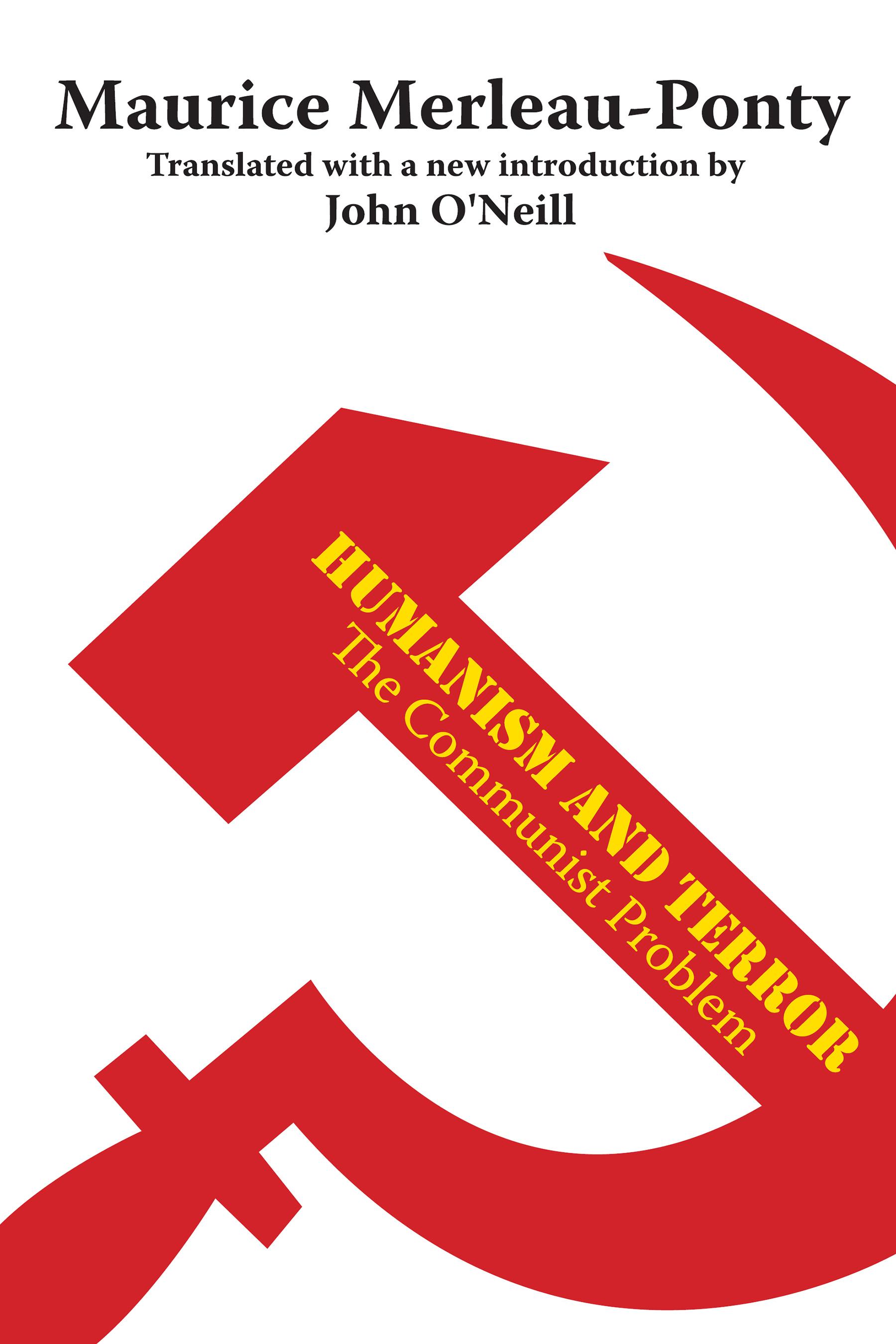
Raymond Aron called Merleau-Ponty "the most influential French philosopher of his generation." First published in France in 1947, Humanism and Terror was in part a response to Arthur Koestler's Darkness at Noon, and in a larger sense a contribution to the political and moral debates of a postwar world suddenly divided into two ideological armed camps. For Merleau-Ponty, the central question was: could Communism transcend its violence and intentions?The value of a society is the value it places upon man's relation to man, Merleau-Ponty examines not only the Moscow trials of the late thirties but also Koestler's re-creation of them. He argues that violence in general in the Communist world can be understood only in the context of revolutionary activism. He demonstrates that it is pointless to ask whether Communism respects the rules of liberal society; it is evident that Communism does not.In post-Communist Europe, when many are addressing similar questions throughout the world, Merleau-Ponty's discourse is of prime importance; it stands as a major and provocative contribution to limits on the use of violence. The argument is placed in its current context in a brilliant new introduction by John O'Neill. His remarks extend the line of argument originally developed by the great French political philosopher. This is a major contribution to political theory and philosophy.
Betaal eenvoudig met kaart, Klarna, Apple Pay of Google Pay. Niet tevreden? Je hebt altijd 14 dagen bedenktijd. Lees meer in onze voorwaarden. Heb je vragen, mail ons dan via hello@memmo.org.
Memmo maakt studeren makkelijker – waar je ook bent ter wereld. Wij brengen je cursusboeken en slimme studietools samen op één plek: samenvattingen, quizzen, podcasts en flashcards. En Ted, je studievriend die antwoord geeft op alles wat je je afvraagt. Meer dan 50.000 studenten studeren hier al – gebouwd om je sneller te laten leren en minder stress te geven.
Misschien vind je dit ook leuk
Koop het boek0