
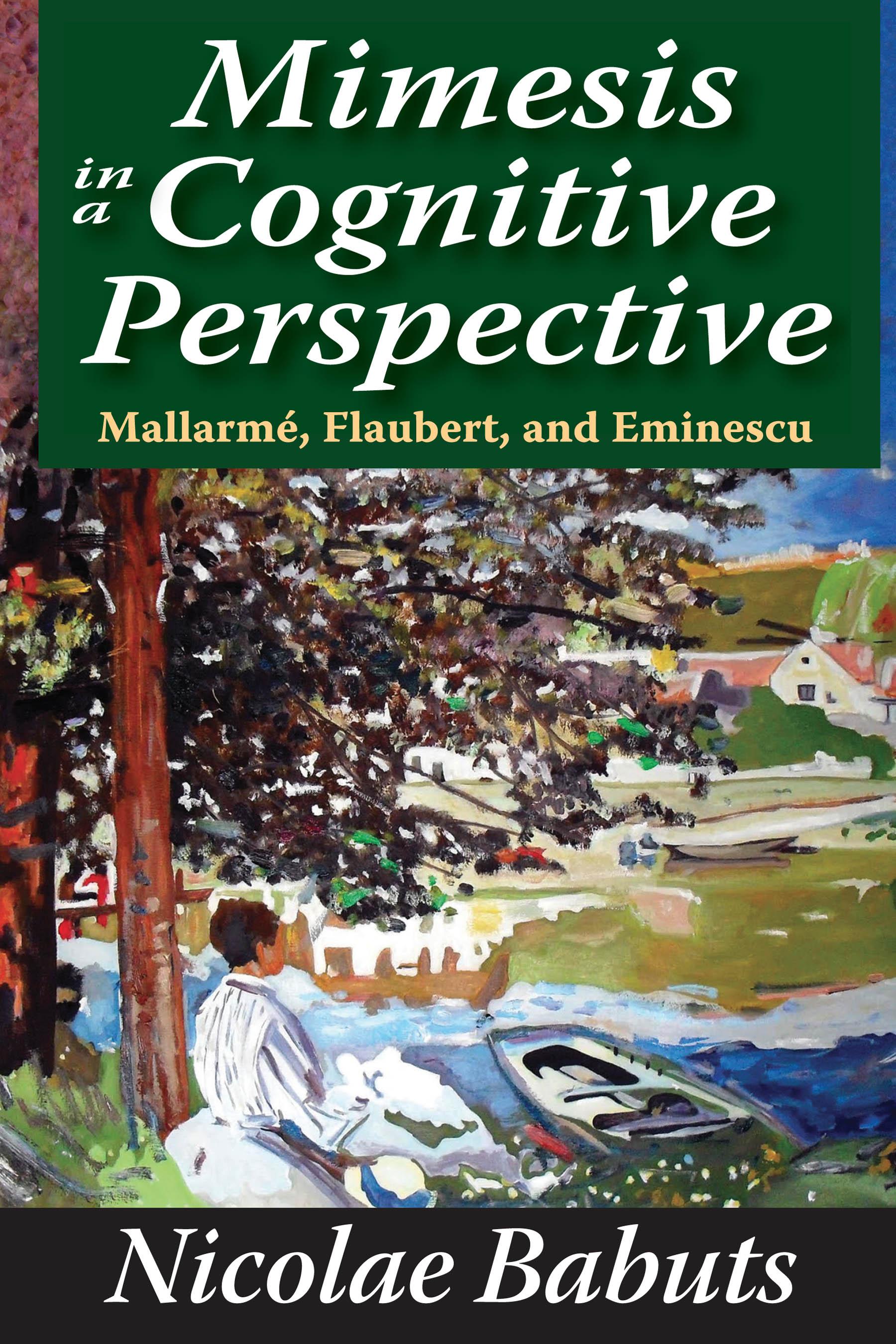
Mimesis is a critical and philosophical term going back to Aristotle. It carries a wide range of meanings, including imitation, representation, mimicry, the act of expression, and the presentation of self. In modern literary criticism, mimesis has received renewed attention in the last two or three decades and been subject to wide-ranging interpretations. Nicolae Babuts looks at the concept of mimesis from a cognitive perspective. He identifies two main strands: the mimetic relation of art and poetry to the world, defined in terms of reference to an external reality, and the importance of memory in the making of plots or storytelling.Babuts suggests that there is a material identity we cannot know beyond the limits of our senses and intellect and a symbolic or coded identity that is processed by memory. All writers, including Mallarme in his esoteric poetry, Flaubert in his realist narratives, and Mihai Eminescu, the Romanian poet, in his romantic poems, rely on mimetic strategies to link the two identities: the images in memory to the outside reality. All order their narratives in accordance with the dynamics of memory. Babuts describes this phenomenon with great insight, showing how new traditions are formed.
Betaal eenvoudig met kaart, Klarna, Apple Pay of Google Pay. Niet tevreden? Je hebt altijd 14 dagen bedenktijd. Lees meer in onze voorwaarden. Heb je vragen, mail ons dan via hello@memmo.org.
Memmo maakt studeren makkelijker – waar je ook bent ter wereld. Wij brengen je cursusboeken en slimme studietools samen op één plek: samenvattingen, quizzen, podcasts en flashcards. En Ted, je studievriend die antwoord geeft op alles wat je je afvraagt. Meer dan 50.000 studenten studeren hier al – gebouwd om je sneller te laten leren en minder stress te geven.
Misschien vind je dit ook leuk
Koop het boek0