
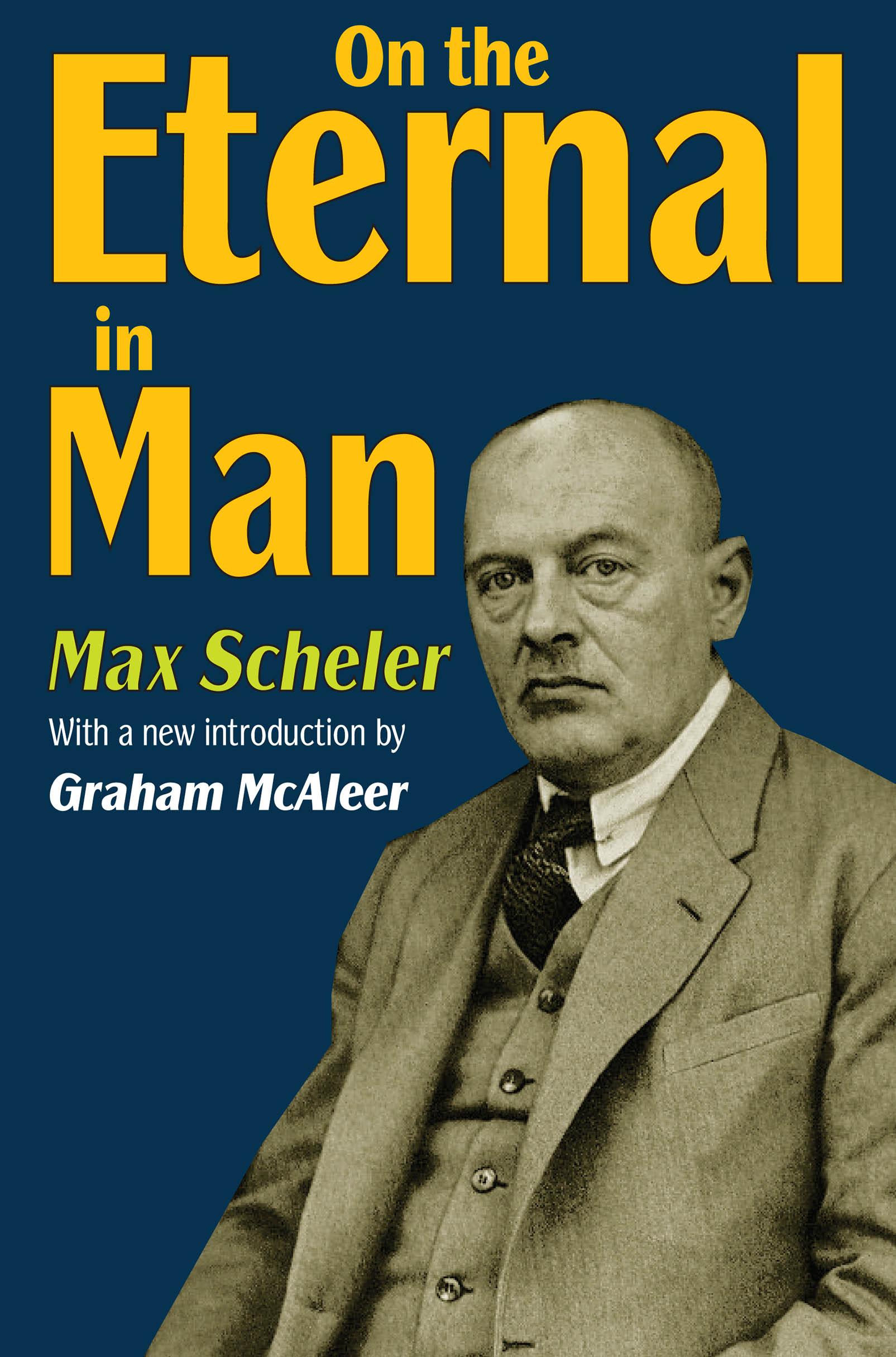
Max Scheler (1874-1928) decisively influenced German philosophy in the period after the First World War, a time of upheaval and new beginnings. Without him, the problems of German philosophy today, and its attempts to solve them would be quite inconceivable. What was new in his philosophy was that he used phenomenology to investigate spiritual realities.
The subject of On the Eternal in Man is the divine and its reality, the originality and non-derivation of religious experience. Scheler shows the characteristic quality of that which is religious. It is a particular essence that cannot be reduced to anything else. It is a sphere that belongs essentially to humankind; without it we would not be human. If genuine fulfillment is denied it, substitutes come into being. This religious sphere is the most essential, decisive one. It determines man's basic attitude towards reality and in a sense the color, extent and position of all the other human domains in life. It forms the basis for various views about life and thought.
Scheler was emphatically an intuitive philosopher. In Scheler's work the break between being as the almighty but blind rage and value as the knowing but powerless spirit-has become complete, and makes of each human a split being. Personal experiences may be reflected here. The development of Scheler's work as a whole was highly dependent on his personal experiences. It is this that gives Scheler's work its liveliness and its validity.
Betaal eenvoudig met kaart, Klarna, Apple Pay of Google Pay. Niet tevreden? Je hebt altijd 14 dagen bedenktijd. Lees meer in onze voorwaarden. Heb je vragen, mail ons dan via hello@memmo.org.
Memmo maakt studeren makkelijker – waar je ook bent ter wereld. Wij brengen je cursusboeken en slimme studietools samen op één plek: samenvattingen, quizzen, podcasts en flashcards. En Ted, je studievriend die antwoord geeft op alles wat je je afvraagt. Meer dan 50.000 studenten studeren hier al – gebouwd om je sneller te laten leren en minder stress te geven.