
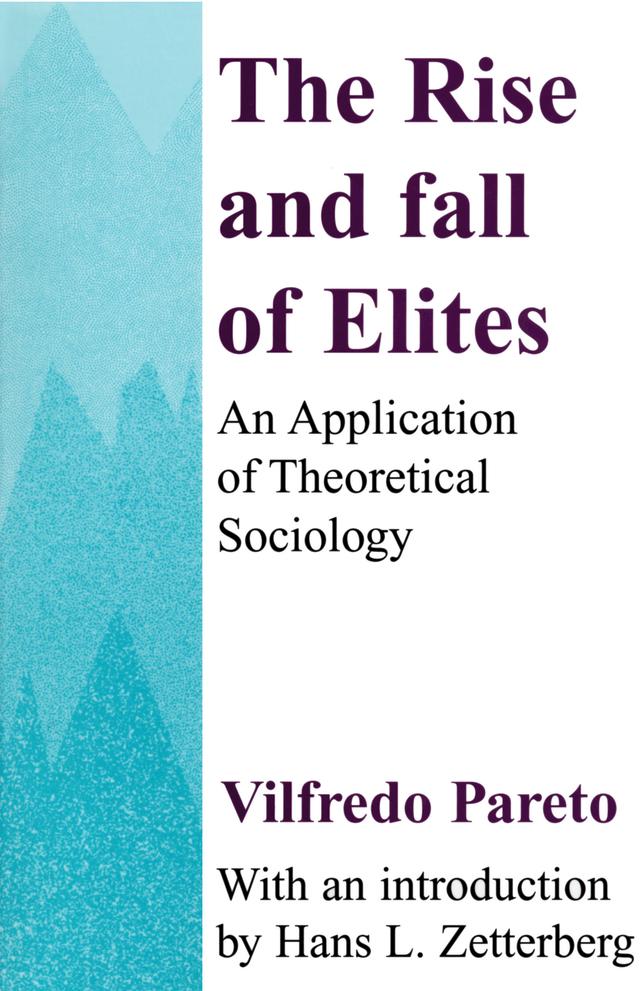
Combining a thorough introduction to the work of nineteenth-and early twentieth-century Italian social theorist Vilfredo Pareto with a highly readable English translation of Pareto's last monograph "Generalizations," originally published in 1920, this work illustrates how and why democratic forms of government undergo decay and are eventually reinvigorated. More than any other social scientist of his generation, Pareto offers a well-developed, articulate, and compelling theory of change based on a Newtonian vision of science and an engineering model of social equilibrium. This dynamic involves a shifting balance among the countervailing forces of centralization and decentralization of power, economic expansion and contraction, and liberalism versus traditionalism in public sentiment. By 1920, Pareto had developed a scheme for predicting shifts in magnitude of these forces and subsequent change in the character of society. This book will be of interest to students, teachers, or general readers interested in political science, sociology and late-nineteenth/ early-twentieth century social theory.
Betaal eenvoudig met kaart, Klarna, Apple Pay of Google Pay. Niet tevreden? Je hebt altijd 14 dagen bedenktijd. Lees meer in onze voorwaarden. Heb je vragen, mail ons dan via hello@memmo.org.
Memmo maakt studeren makkelijker – waar je ook bent ter wereld. Wij brengen je cursusboeken en slimme studietools samen op één plek: samenvattingen, quizzen, podcasts en flashcards. En Ted, je studievriend die antwoord geeft op alles wat je je afvraagt. Meer dan 50.000 studenten studeren hier al – gebouwd om je sneller te laten leren en minder stress te geven.
Misschien vind je dit ook leuk
Koop het boek0