
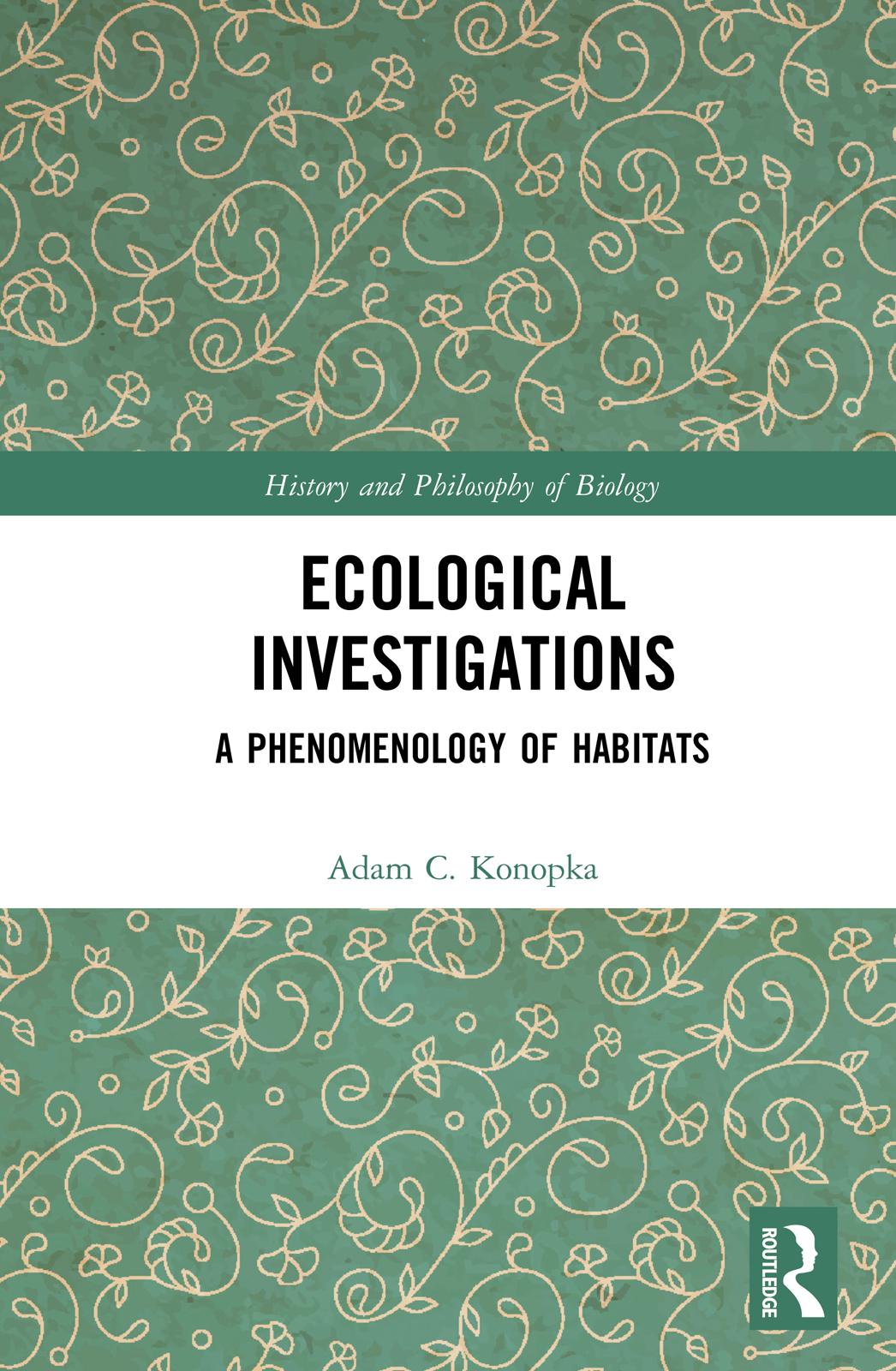
These investigations identify and clarify some basic assumptions and methodological principles involved in ecological explanations of plant associations. How are plants geographically distributed into characteristic groups? What are the basic conditions that organize groups of interspecific plant populations that are characteristic of particular kinds of habitats? Answers to these questions concerning the geographical distribution of plants in late 19th century European plant geography and early 20th century American plant ecology can be distinguished according to differing logical assumptions concerning the habitats of plant associations. Through an analysis of several significant case studies in the early history of plant ecology, Konopka distinguishes a logic of habitats that conceives of plant associations in an analogy to individual organisms with a logic that conceives of plant associations in a reciprocal relation to habitat physiography. He argues that a phenomenological conception of the logical attributes of habitats can philosophically complement the physiographic tradition in early plant ecology and provide an attractive alternative to standard reductionism and holism debates that persist today. This wide ranging and original analysis will be valuable for readers interested in the history and philosophy of ecology.
Betaal eenvoudig met kaart, Klarna, Apple Pay of Google Pay. Niet tevreden? Je hebt altijd 14 dagen bedenktijd. Lees meer in onze voorwaarden. Heb je vragen, mail ons dan via hello@memmo.org.
Memmo maakt studeren makkelijker – waar je ook bent ter wereld. Wij brengen je cursusboeken en slimme studietools samen op één plek: samenvattingen, quizzen, podcasts en flashcards. En Ted, je studievriend die antwoord geeft op alles wat je je afvraagt. Meer dan 50.000 studenten studeren hier al – gebouwd om je sneller te laten leren en minder stress te geven.