
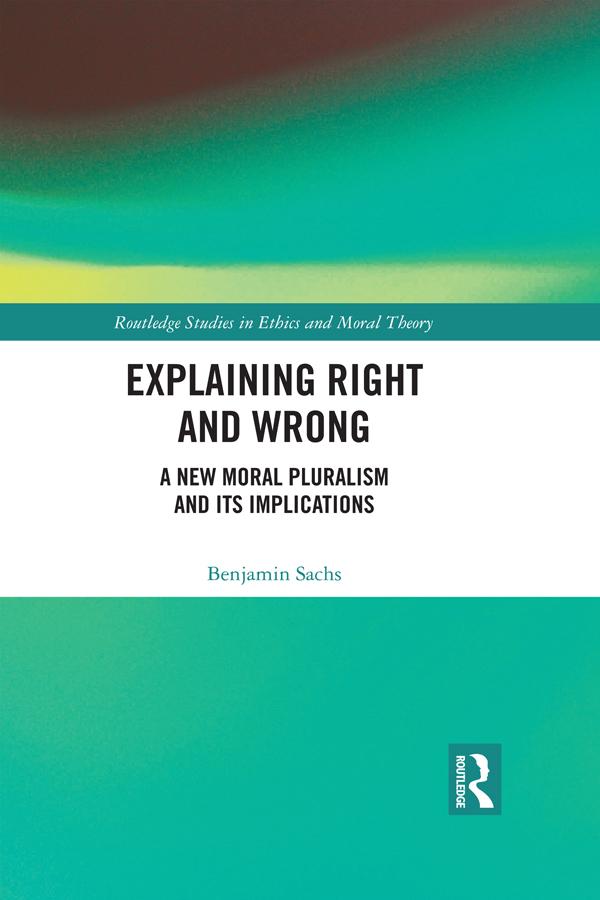
Explaining Right and Wrong aims to shake the foundations of contemporary ethics by showing that moral philosophers have been deploying a mistaken methodology in their efforts to figure out the truth about what we morally ought to do. Benjamin Sachs argues that moral theorizing makes sense only if it is conceived of as an explanatory project and carried out accordingly. The book goes on to show that the most prominent forms of moral monism—consequentialism, Kantianism, and contractarianism/contractualism—as well as Rossian pluralism, each face devastating explanatory objections. It offers in place of these flawed options a brand-new family of normative ethical theories, non-Rossian pluralism. It then argues that the best kind of non-Rossian pluralism will be spare; in particular, it will deny that an action can be wrong in virtue of constituting a failure to distribute welfare in a particular way or that an action can be wrong in virtue of constituting a failure to rescue. Furthermore, it also aims to show that a great deal of contemporary writing on the distribution of health care resources in cases of scarcity is targeted at questions that either have no answers at all or none that ordinary moral theorizing can uncover.
Betaal eenvoudig met kaart, Klarna, Apple Pay of Google Pay. Niet tevreden? Je hebt altijd 14 dagen bedenktijd. Lees meer in onze voorwaarden. Heb je vragen, mail ons dan via hello@memmo.org.
Memmo maakt studeren makkelijker – waar je ook bent ter wereld. Wij brengen je cursusboeken en slimme studietools samen op één plek: samenvattingen, quizzen, podcasts en flashcards. En Ted, je studievriend die antwoord geeft op alles wat je je afvraagt. Meer dan 50.000 studenten studeren hier al – gebouwd om je sneller te laten leren en minder stress te geven.