
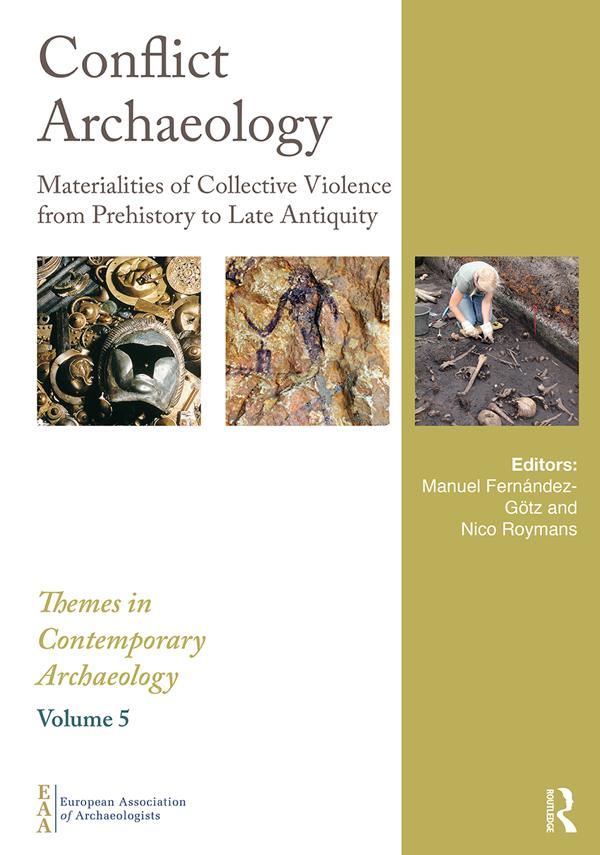
In the past two decades, conflict archaeology has become firmly established as a promising field of research, as reflected in publications, symposia, conference sessions and fieldwork projects. It has its origins in the study of battlefields and other conflict-related phenomena in the modern Era, but numerous studies show that this theme, and at least some of its methods, techniques and theories, are also relevant for older historical and even prehistoric periods.
This book presents a series of case-studies on conflict archaeology in ancient Europe, based on the results of both recent fieldwork and a reassessment of older excavations. The chronological framework spans from the Neolithic to Late Antiquity, and the geographical scope from Iberia to Scandinavia.
Along key battlefields such as the Tollense Valley, Baecula, Alesia, Kalkriese and Harzhorn, the volume also incorporates many other sources of evidence that can be directly related to past conflict scenarios, including defensive works, military camps, battle-related ritual deposits, and symbolic representations of violence in iconography and grave goods. The aim is to explore the material evidence for the study of warfare, and to provide new theoretical and methodological insights into the archaeology of mass violence in ancient Europe and beyond.
Betaal eenvoudig met kaart, Klarna, Apple Pay of Google Pay. Niet tevreden? Je hebt altijd 14 dagen bedenktijd. Lees meer in onze voorwaarden. Heb je vragen, mail ons dan via hello@memmo.org.
Memmo maakt studeren makkelijker – waar je ook bent ter wereld. Wij brengen je cursusboeken en slimme studietools samen op één plek: samenvattingen, quizzen, podcasts en flashcards. En Ted, je studievriend die antwoord geeft op alles wat je je afvraagt. Meer dan 50.000 studenten studeren hier al – gebouwd om je sneller te laten leren en minder stress te geven.