
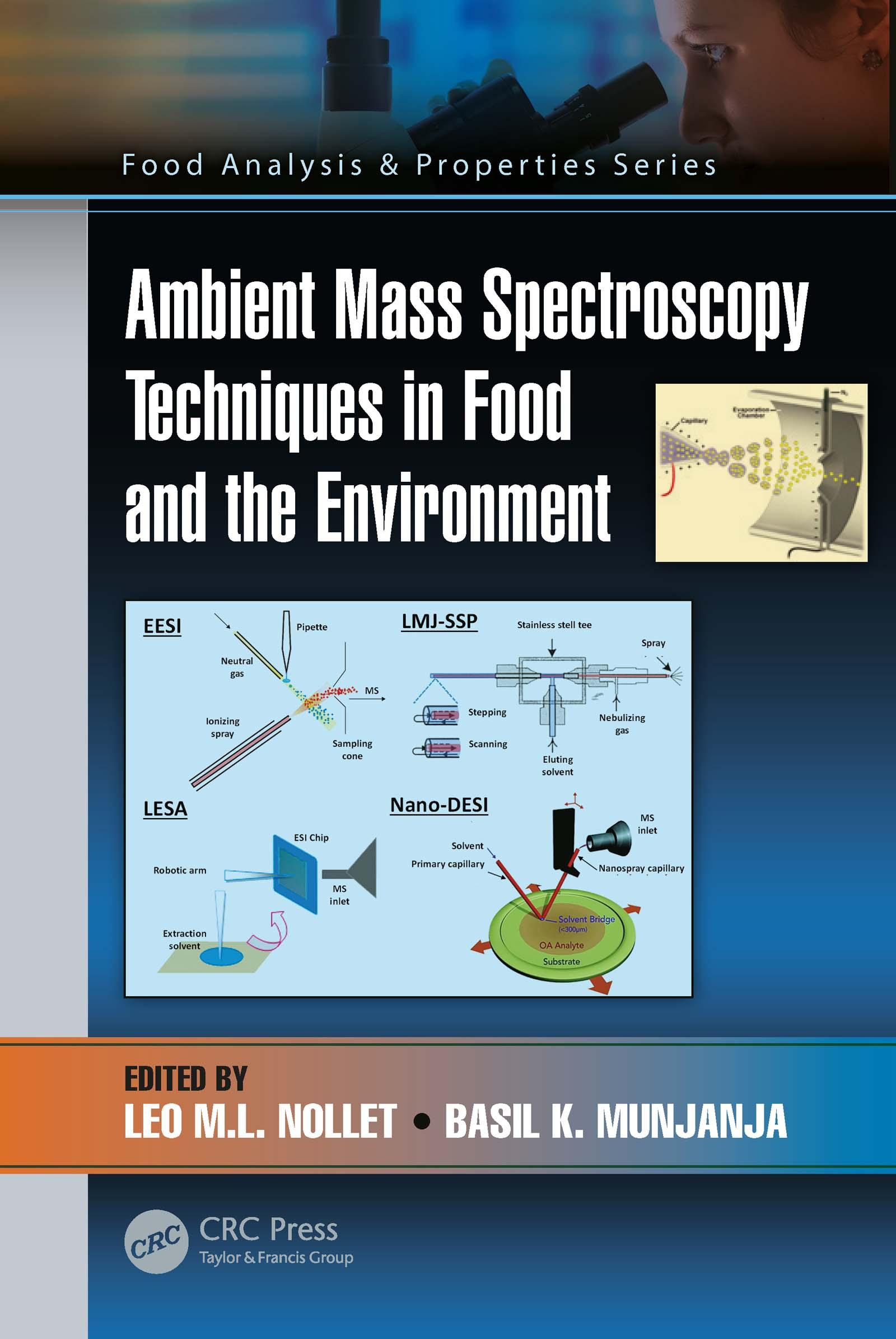
Ambient mass spectrometry—that is the use of mass spec but in the atmospheric environment—has been widely employed in food and environmental analysis. Ambient Mass Spectroscopy Techniques in Food and the Environment presents the theoretical underpinnings of mass spectrometry, and the benefits and pitfalls of ambient mass spectrometry, as well as the latest developments of the technique, in the analysis of food and environmental parameters. It describes methods that enable the detection of surface materials like waxes, alkaloids, flavors, or pesticides by plainly exposing the corresponding items to the ionization region of the interface, without harm to samples.
Features:
- Explains the theoretical aspects of ambient mass spectrometry
- Describes how to use ambient MS techniques for food safety, authenticity, and traceability screening
- Lists the benefits of ambient MS in analysis of food and environmental parameters
- Covers recent developments of ambient MS in analysis of food and environmental parameters
The specialized work provides insight to professionals practicing in food and the environment, including food scientists, food engineers, food biotechnologists, chemical engineers, and those working in research labs, universities, and government regulatory agencies.
Betaal eenvoudig met kaart, Klarna, Apple Pay of Google Pay. Niet tevreden? Je hebt altijd 14 dagen bedenktijd. Lees meer in onze voorwaarden. Heb je vragen, mail ons dan via hello@memmo.org.
Memmo maakt studeren makkelijker – waar je ook bent ter wereld. Wij brengen je cursusboeken en slimme studietools samen op één plek: samenvattingen, quizzen, podcasts en flashcards. En Ted, je studievriend die antwoord geeft op alles wat je je afvraagt. Meer dan 50.000 studenten studeren hier al – gebouwd om je sneller te laten leren en minder stress te geven.