
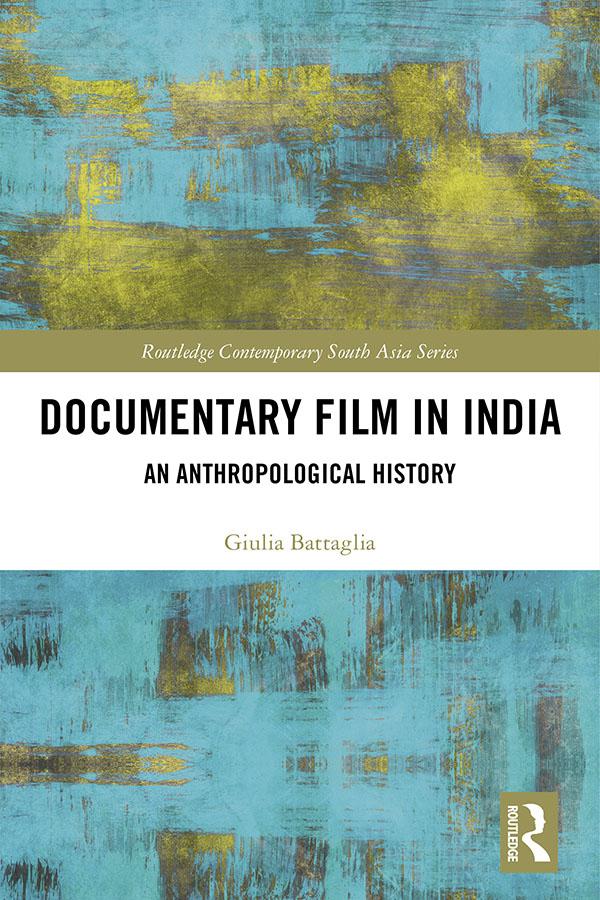
This book maps a hundred years of documentary film practices in India. It demonstrates that in order to study the development of a film practice, it is necessary to go beyond the classic analysis of films and filmmakers and focus on the discourses created around and about the practice in question. The book navigates different historical moments of the growth of documentary filmmaking in India from the colonial period to the present day. In the process, it touches upon questions concerning practices and discourses about colonial films, postcolonial institutions, independent films, filmmakers and filmmaking, the influence of feminism and the articulation of concepts of performance and performativity in various films practices. It also reflects on the centrality of technological change in different historical moments and that of film festivals and film screenings across time and space.
Grounded in anthropological fieldwork and archival research and adopting Foucault’s concept of ‘effective history’, this work searches for points of origin that creates ruptures and deviations taking distance from conventional ways of writing film histories. Rather than presenting a univocal set of arguments and conclusions about changes or new developments of film techniques, the originality of the book is in offering an open structure (or an open archive) to enable the reader to engage with mechanisms of creation, engagement and participation in film and art practices at large. In adopting this form, the book conceptualises ‘Anthropology’ as also an art practice, interested, through its theoretico-methodological approach, in creating an open archive of engagement rather than a representation of a distant ‘other’. Similarly, documentary filmmaking in India is seen as primarily a process of creation based on engagement and participation rather than a practice interested in representing an objective reality.
Proposing an innovative way of perceiving the growth of the documentary film genre in the subcontinent, this book will be of interest to film historians and specialists in Indian cinema(s) as well as academics in the field of anthropology of art, media and visual practices and Asian media studies.
Betaal eenvoudig met kaart, Klarna, Apple Pay of Google Pay. Niet tevreden? Je hebt altijd 14 dagen bedenktijd. Lees meer in onze voorwaarden. Heb je vragen, mail ons dan via hello@memmo.org.
Memmo maakt studeren makkelijker – waar je ook bent ter wereld. Wij brengen je cursusboeken en slimme studietools samen op één plek: samenvattingen, quizzen, podcasts en flashcards. En Ted, je studievriend die antwoord geeft op alles wat je je afvraagt. Meer dan 50.000 studenten studeren hier al – gebouwd om je sneller te laten leren en minder stress te geven.