
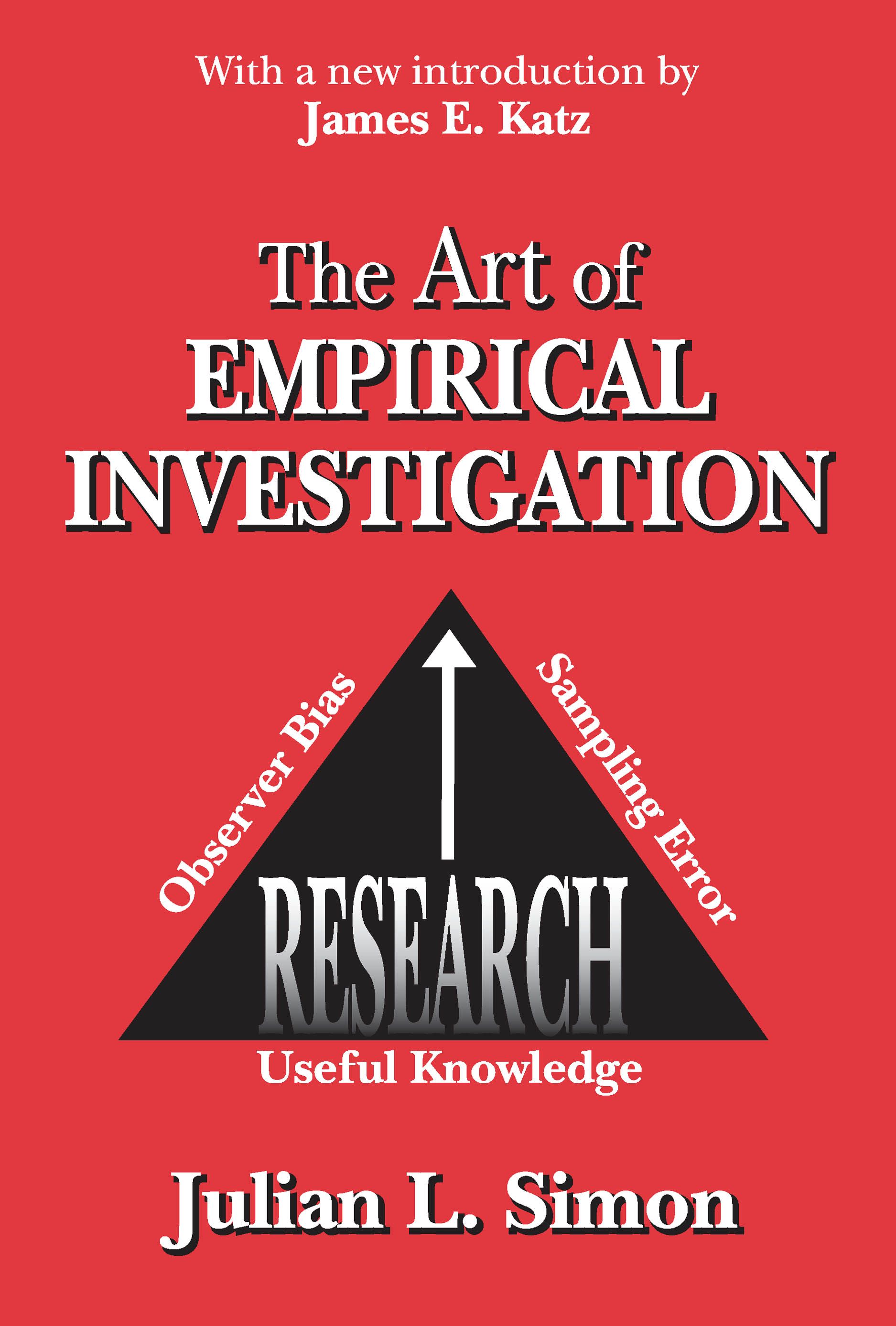
Julian Simon was known for his methodical, and often controversial, writings challenging conventional beliefs about overpopulation, pollution, disappearing farmland, and the scarcity of energy sources and raw materials. But throughout his works is a common theme: that responsible, unbiased research and examination of the data is indispensable to formulating a well-informed and accurate opinion. The Art of Empirical Investigation teaches student, professor, researcher, and those interested in ascertaining the truth about social issues just how to proceed.
The Art of Empirical Investigation is a textbook on the basics of social-scientific research. It discusses all the important empirical methods used in social science, and its examples, drawn from a wide variety of academic and applied fields, illustrate the use of each method in its most appropriate context. The actual decisions a researcher must make at every stage of a project are emphasized, as well as obstacles to knowledge--such as observer bias, deception, unreliability of data, and sampling costs--and how to overcome them. Presupposing nothing, the book introduces the reader to the foundations of empirical social-science research, regardless of a specific field. It also makes an important contribution to beginning researchers' understanding of an operational definition of causality, which cuts through philosophical obscurity and teaches the researcher how to decide whether or not a given relationship is causal.
Betaal eenvoudig met kaart, Klarna, Apple Pay of Google Pay. Niet tevreden? Je hebt altijd 14 dagen bedenktijd. Lees meer in onze voorwaarden. Heb je vragen, mail ons dan via hello@memmo.org.
Memmo maakt studeren makkelijker – waar je ook bent ter wereld. Wij brengen je cursusboeken en slimme studietools samen op één plek: samenvattingen, quizzen, podcasts en flashcards. En Ted, je studievriend die antwoord geeft op alles wat je je afvraagt. Meer dan 50.000 studenten studeren hier al – gebouwd om je sneller te laten leren en minder stress te geven.