
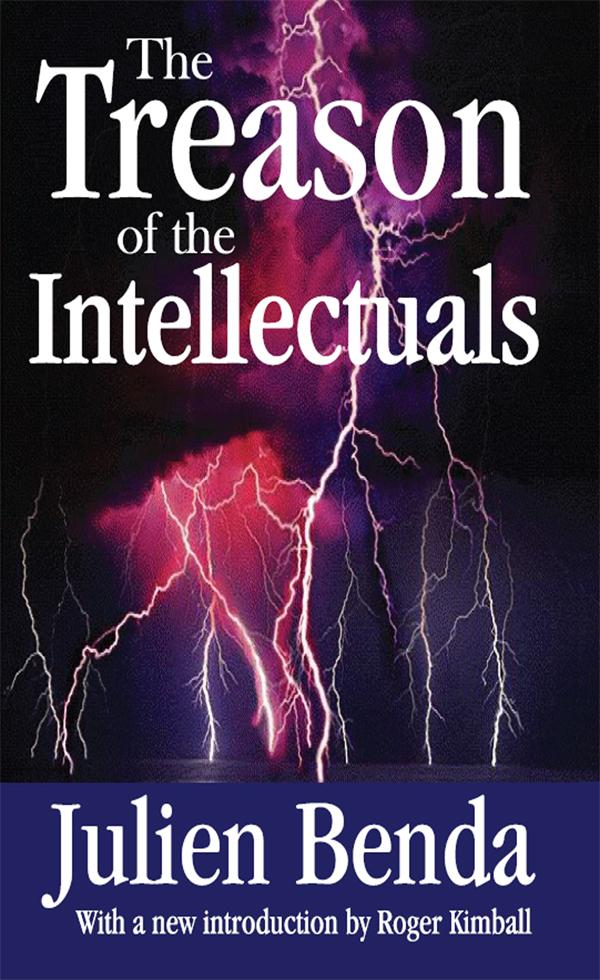
Julien Benda's classic study of 1920s Europe resonates today. The "treason of the intellectuals" is a phrase that evokes much but is inherently ambiguous. The book bearing this title is well known but little understood. This edition is introduced by Roger Kimball.
From the time of the pre-Socratics, intellectuals were a breed apart. They were non-materialistic knowledge-seekers who believed in a universal humanism and represented a cornerstone of civilized society. According to Benda, this all began to change in the early twentieth century. In Europe in the 1920s, intellectuals began abandoning their attachment to traditional philosophical and scholarly ideals, and instead glorified particularisms and moral relativism.
The "treason" of which Benda writes is the betrayal by the intellectuals of their unique vocation. He criticizes European intellectuals for allowing political commitment to insinuate itself into their understanding of the intellectual vocation, ushering the world into "the age of the intellectual organization of political hatreds." From the savage flowering of ethnic and religious hatreds in the Middle East and throughout Europe today to the mendacious demand for political correctness and multiculturalism on college campuses everywhere in the West, the treason of the intellectuals continues to play out its unedifying drama.
Betaal eenvoudig met kaart, Klarna, Apple Pay of Google Pay. Niet tevreden? Je hebt altijd 14 dagen bedenktijd. Lees meer in onze voorwaarden. Heb je vragen, mail ons dan via hello@memmo.org.
Memmo maakt studeren makkelijker – waar je ook bent ter wereld. Wij brengen je cursusboeken en slimme studietools samen op één plek: samenvattingen, quizzen, podcasts en flashcards. En Ted, je studievriend die antwoord geeft op alles wat je je afvraagt. Meer dan 50.000 studenten studeren hier al – gebouwd om je sneller te laten leren en minder stress te geven.