
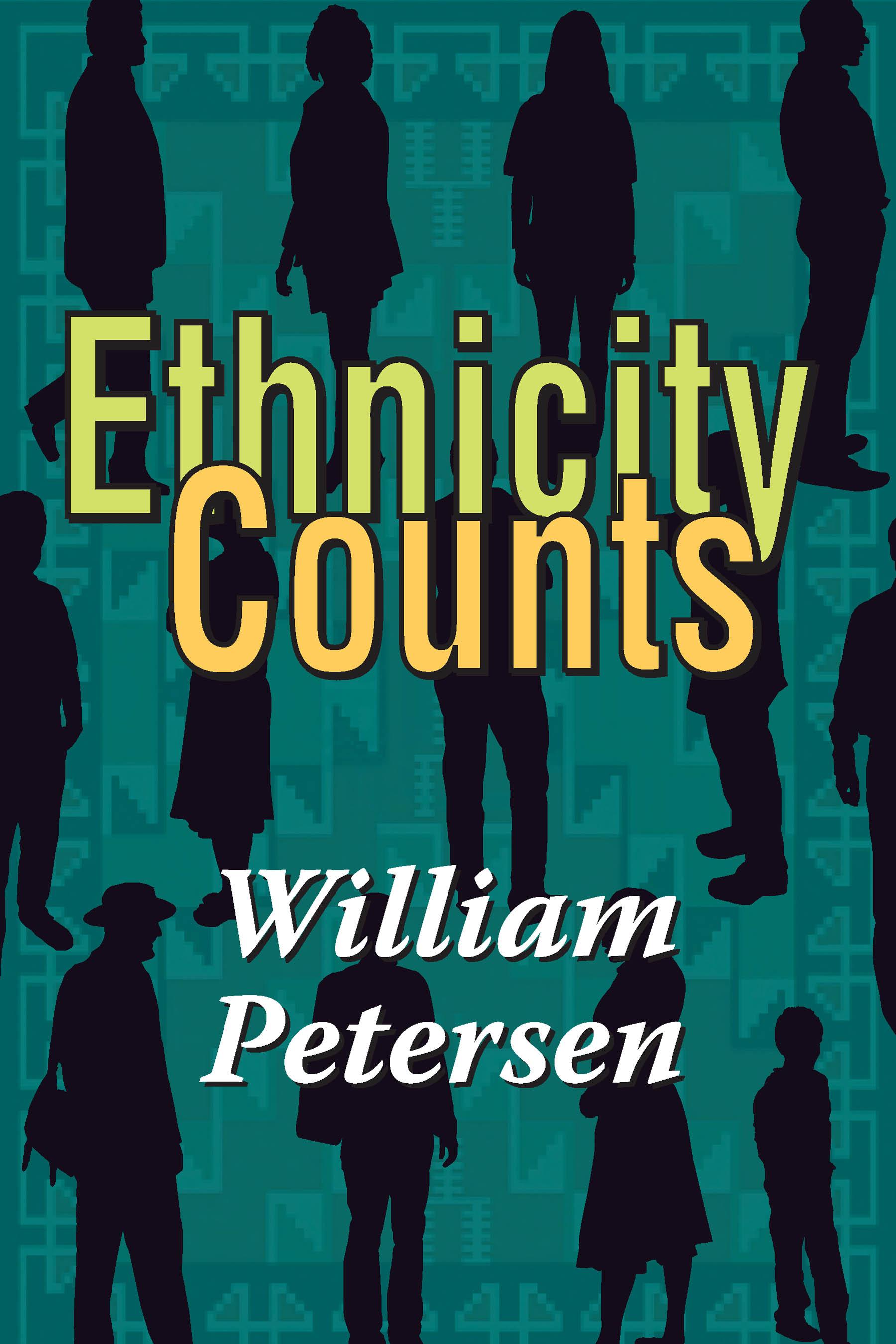
Official statistics about ethnicity in advanced societies are no better than those in less developed countries. An open industrial society is inherently fluid, and it is as hard to interpret social class and ethnic groups there as in a nearly static community. In consequence, the collection and interpretation of ethnic statistics is frequently a battleground where the groups being counted contest each element of every enumeration.
William Petersen describes how ethnic identity is determined and how ethnic or racial units are counted by official statistical agencies in the United States and elsewhere. The chapters in this book cover such topics as: "Identification of Americans of European Descent," "Differentiation among Blacks," "Ethnic Relations in the Netherlands," "Two Case Studies: Japan and Switzerland," and "Who is a Jew?"
Petersen argues that the general public is overly impressed by assertions about ethnicity, particularly if they are supported by numbers and graphs. The flood of American writings about race and ethnicity gives no sign of abatement. Ethnicity Counts offers an indispensible background to meaningful interpretation of statistics on ethnicity, and will be important to sociologists, historians, policymakers, and government officials.
Betaal eenvoudig met kaart, Klarna, Apple Pay of Google Pay. Niet tevreden? Je hebt altijd 14 dagen bedenktijd. Lees meer in onze voorwaarden. Heb je vragen, mail ons dan via hello@memmo.org.
Memmo maakt studeren makkelijker – waar je ook bent ter wereld. Wij brengen je cursusboeken en slimme studietools samen op één plek: samenvattingen, quizzen, podcasts en flashcards. En Ted, je studievriend die antwoord geeft op alles wat je je afvraagt. Meer dan 50.000 studenten studeren hier al – gebouwd om je sneller te laten leren en minder stress te geven.