
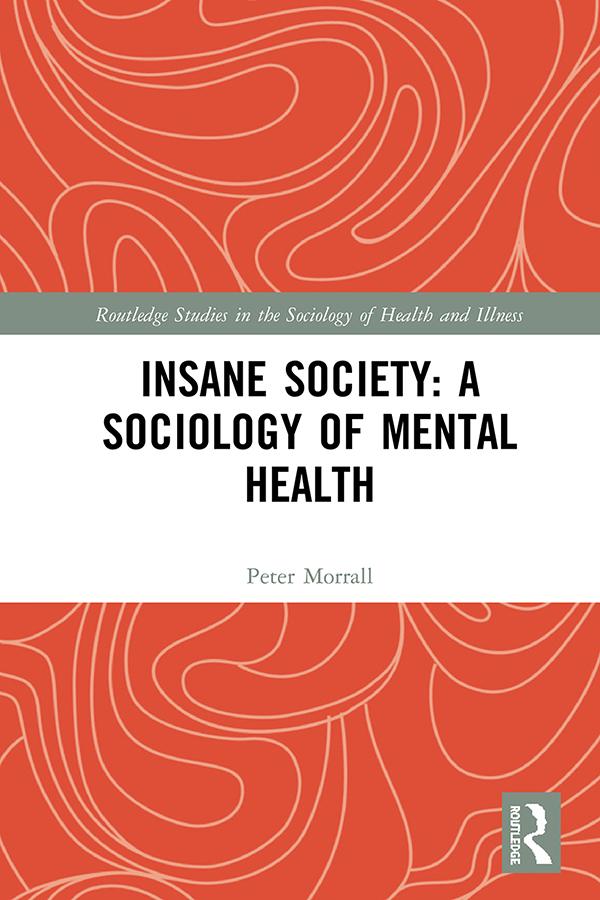
This book critiques the connection between Western society and madness, scrutinizing if and how societal insanity affects the cause, construction, and consequence of madness.
Looking beyond the affected individual to their social, political, economic, ecological, and cultural context, this book examines whether society itself, and its institutions, divisions, practices, and values, is mad. That society’s insanity is relevant to the sanity and insanity of its citizens has been argued by Fromm in The Sane Society, but also by a host of sociologists, social thinkers, epidemiologists and biologists. This book builds on classic texts such as Foucault’s History of Madness, Scull’s Marxist-oriented works and more recent publications which have arisen from a range of socio-political and patient-orientated movements. Chapters in this book draw on biology, psychology, sociological and anthropological thinking that argues that where madness is concerned, society matters.
Providing an extended case study of how the sociological imagination should operate in a contemporary setting, this book draws on genetics, neuroscience, cognitive science, radical psychology, and evolutionary psychology/psychiatry. It is an important read for students and scholars of sociology, anthropology, social policy, criminology, health, and mental health.
Betaal eenvoudig met kaart, Klarna, Apple Pay of Google Pay. Niet tevreden? Je hebt altijd 14 dagen bedenktijd. Lees meer in onze voorwaarden. Heb je vragen, mail ons dan via hello@memmo.org.
Memmo maakt studeren makkelijker – waar je ook bent ter wereld. Wij brengen je cursusboeken en slimme studietools samen op één plek: samenvattingen, quizzen, podcasts en flashcards. En Ted, je studievriend die antwoord geeft op alles wat je je afvraagt. Meer dan 50.000 studenten studeren hier al – gebouwd om je sneller te laten leren en minder stress te geven.