
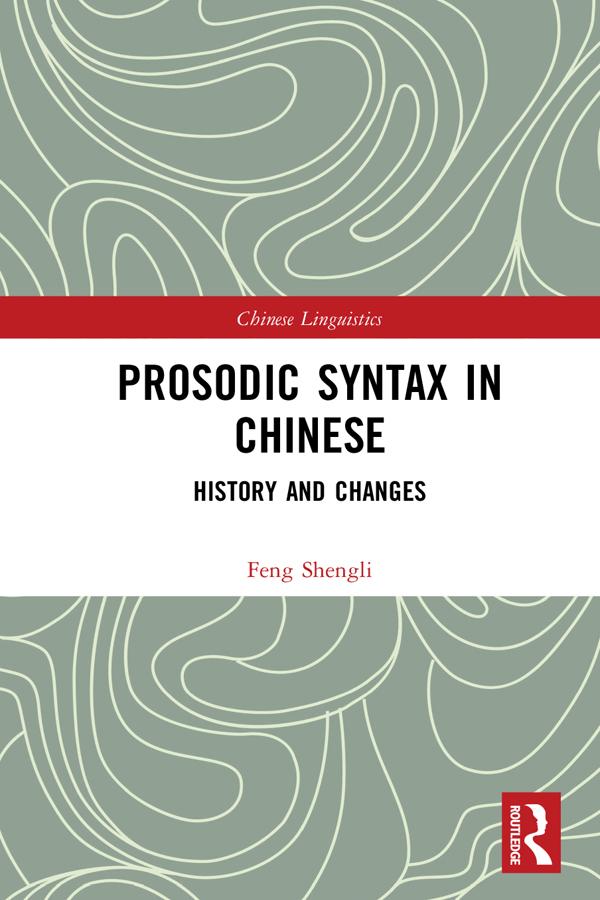
In the two volumes of Prosodic Syntax in Chinese, the author develops a new model, which proposes that the interaction between syntax and prosody is bi-directional and that prosody can not only constrains syntactic structures but also activates syntactic operations. All of the facts investigated in Chinese provide new perspectives for linguistic theories as well as the insights into the nature of human languages. The subtitles of the two volumes are Theory and Facts and History and Change respectively, with each focusing on different topics (though each volume has both theoretical and historical descriptive concerns).
In this volume, the author first introduces the relevant theories and concepts of Metrical Phonology, Prosodic Phonology and Formal Syntax, and formulates the Government-based Nuclear Stress Rule in Chinese which can explain how and why Mandarin Chinese sentences are structured in a particular way. It is proposed that prosody can not only blocks the legitimate syntactic structures but also activates the potential syntactic operations. The former can be seen from the ungrammatical sentences that are caused by the inoperable NSR in these structures while the latter can be seen from sentences that are derived from syntactic movements which, however, are operable only when being motivated by prosody.
Betaal eenvoudig met kaart, Klarna, Apple Pay of Google Pay. Niet tevreden? Je hebt altijd 14 dagen bedenktijd. Lees meer in onze voorwaarden. Heb je vragen, mail ons dan via hello@memmo.org.
Memmo maakt studeren makkelijker – waar je ook bent ter wereld. Wij brengen je cursusboeken en slimme studietools samen op één plek: samenvattingen, quizzen, podcasts en flashcards. En Ted, je studievriend die antwoord geeft op alles wat je je afvraagt. Meer dan 50.000 studenten studeren hier al – gebouwd om je sneller te laten leren en minder stress te geven.