
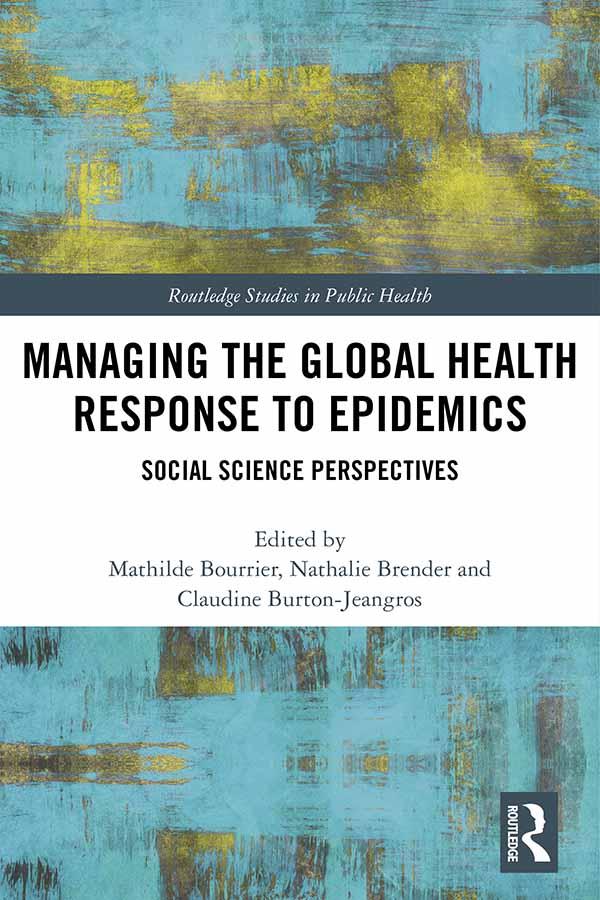
Recent epidemics have prompted large-scale international interventions, aimed at mitigating the spread of disease in a globalized world. During a crisis, however, global health actions including planning and organizing, communicating about risk, and cost benefit evaluations aren’t usually part of a single, integrated global response. Arguing that an uncoordinated approach can be challenged by local conditions and expectations, generating a wide range of resistance and difficulties, this volume provides important insights for future outbreak management and global health governance.
Drawing on experiences with A(H1N1) and Ebola virus disease, the book is divided into three parts looking at how responses to global health crises have developed, lessons learned from particular pandemics and the ethical implications of our management of them. Individual chapters focus on, among other issues, financing, cost–benefit analysis, matrix management, risk communication and organizational strategies.
Taking a social science perspective, this valuable book outlines the current state of global health emergency responses and explores ways in which they can be improved. It is a useful read for academics and practitioners interested in global health, the sociology of health and illness, health economics and emergency management.
Betaal eenvoudig met kaart, Klarna, Apple Pay of Google Pay. Niet tevreden? Je hebt altijd 14 dagen bedenktijd. Lees meer in onze voorwaarden. Heb je vragen, mail ons dan via hello@memmo.org.
Memmo maakt studeren makkelijker – waar je ook bent ter wereld. Wij brengen je cursusboeken en slimme studietools samen op één plek: samenvattingen, quizzen, podcasts en flashcards. En Ted, je studievriend die antwoord geeft op alles wat je je afvraagt. Meer dan 50.000 studenten studeren hier al – gebouwd om je sneller te laten leren en minder stress te geven.