
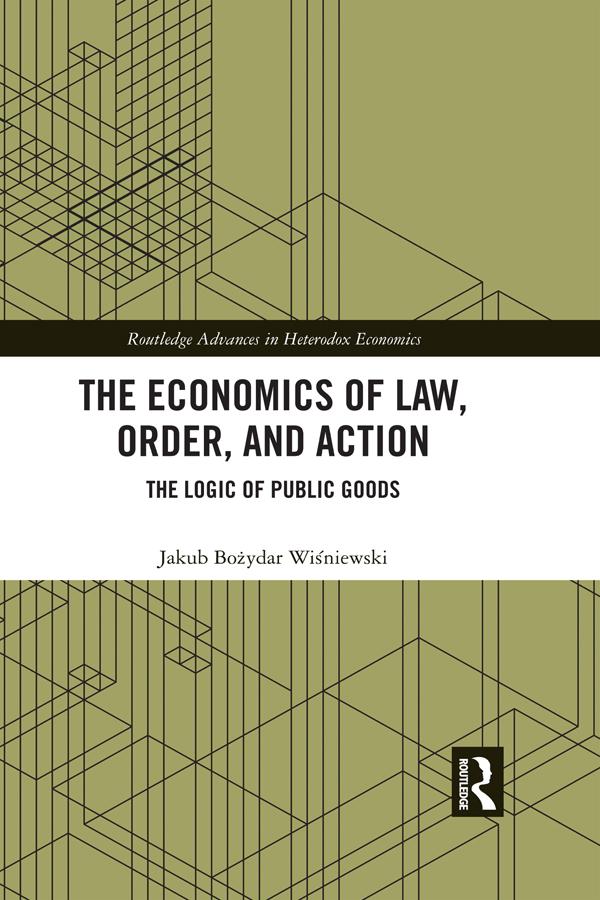
According to the standard position of the economic mainstream, the efficient production of so-called public goods, including law and defense, requires the use of territorial monopolies of coercive force. Two arguments are put forward for this position: a "positive" one, based on the claim that only such institutions can successfully supply society with crucial public goods, and a "negative" one, based on the claim that such institutions by themselves constitute inevitable "public bads".
This book challenges this assumption by utilizing the insights of the Austrian School of Economics, New Institutionalism, constitutional political economy, and other heterodox economic approaches, combined with economically informed ethical analysis. It puts forward a positive case for voluntary social organization that offers new insights into the intersection of economic logic, social philosophy, institutional analysis, and the theory of entrepreneurship. In other words, in an attempt to draw on the interdisciplinary spirit of classical political economy, this book aims at providing a comprehensive economic and ethical case for extending the applicability of voluntary, entrepreneurial cooperation to the realm of creating and sustaining legal and protective services together with attendant institutional frameworks.
Betaal eenvoudig met kaart, Klarna, Apple Pay of Google Pay. Niet tevreden? Je hebt altijd 14 dagen bedenktijd. Lees meer in onze voorwaarden. Heb je vragen, mail ons dan via hello@memmo.org.
Memmo maakt studeren makkelijker – waar je ook bent ter wereld. Wij brengen je cursusboeken en slimme studietools samen op één plek: samenvattingen, quizzen, podcasts en flashcards. En Ted, je studievriend die antwoord geeft op alles wat je je afvraagt. Meer dan 50.000 studenten studeren hier al – gebouwd om je sneller te laten leren en minder stress te geven.