
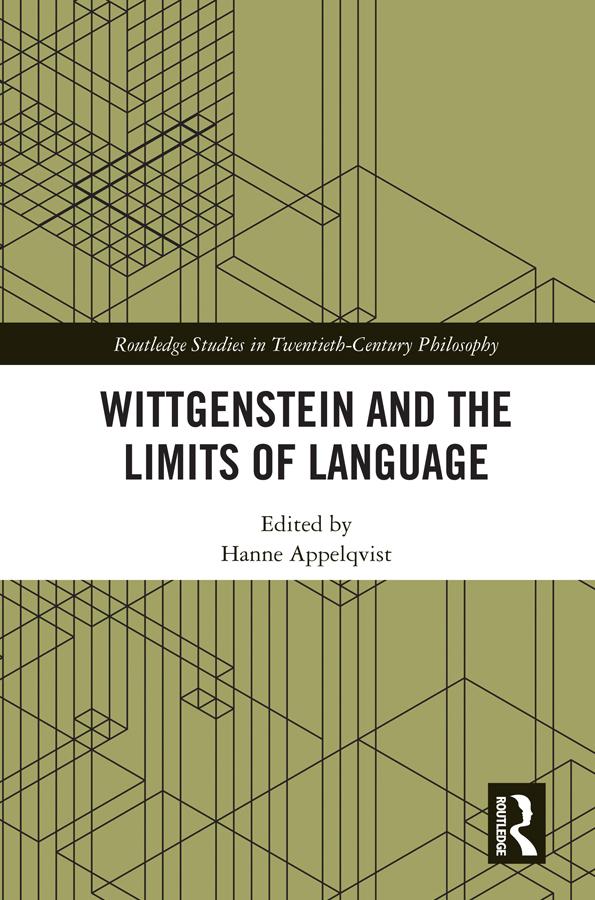
The limit of language is one of the most pervasive notions found in Wittgenstein’s work, both in his early Tractatus Logico-Philosophicus and his later writings. Moreover, the idea of a limit of language is intimately related to important scholarly debates on Wittgenstein’s philosophy, such as the debate between the so-called traditional and resolute interpretations, Wittgenstein’s stance on transcendental idealism, and the philosophical import of Wittgenstein’s latest work On Certainty.
This collection includes thirteen original essays that provide a comprehensive overview of the various ways in which Wittgenstein appeals to the limit of language at different stages of his philosophical development. The essays connect the idea of a limit of language to the most important themes discussed by Wittgenstein—his conception of logic and grammar, the method of philosophy, the nature of the subject, and the foundations of knowledge—as well as his views on ethics, aesthetics, and religion. The essays also relate Wittgenstein’s thought to his contemporaries, including Carnap, Frege, Heidegger, Levinas, and Moore.
Betaal eenvoudig met kaart, Klarna, Apple Pay of Google Pay. Niet tevreden? Je hebt altijd 14 dagen bedenktijd. Lees meer in onze voorwaarden. Heb je vragen, mail ons dan via hello@memmo.org.
Memmo maakt studeren makkelijker – waar je ook bent ter wereld. Wij brengen je cursusboeken en slimme studietools samen op één plek: samenvattingen, quizzen, podcasts en flashcards. En Ted, je studievriend die antwoord geeft op alles wat je je afvraagt. Meer dan 50.000 studenten studeren hier al – gebouwd om je sneller te laten leren en minder stress te geven.