
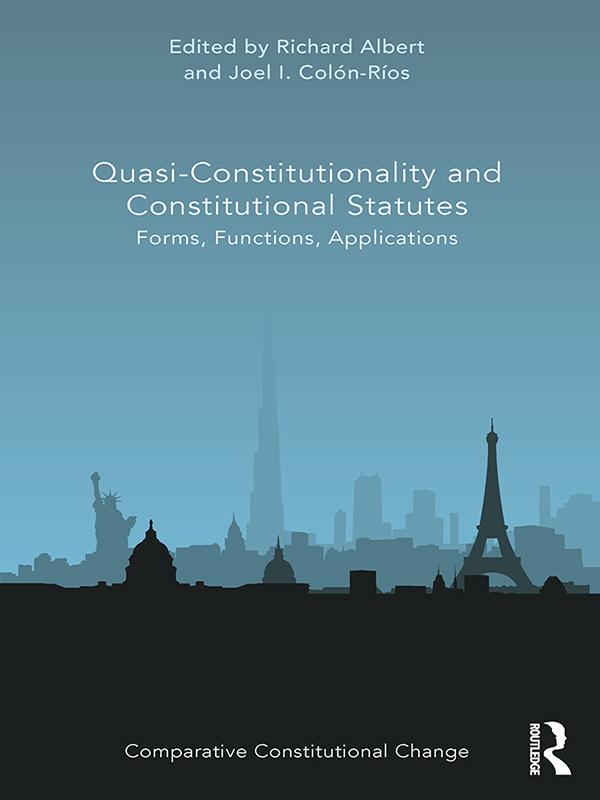
This book examines the interstices among statutory enactment, constitutional convention and formal constitution in which quasi-constitutionality exists. It provides a focal resource that can serve as a point of reference for scholars interested in quasi-constitutionality as a whole, from national and transnational perspectives, expanding on its many forms, functions, and applications with recourse to comparative insights. The book is divided in three main Parts, each of them preceded by a separate critical introduction in which an informed scholar contextualizes the chapters and offers reflections on the themes they develop. The first Part, titled 'Forms', is composed of chapters that address, from a theoretical and comparative perspective, questions related to the recognition of constitutional statutes and quasi-constitutional legislation. The second Part is titled 'Functions', and contains chapters that explore the explanatory power of quasi-constitutionality in different institutional contexts. The third Part, titled 'Applications', considers the ways in which constitutional statutes and quasi-constitutionality operate in relation to particular tensions and debates present in various jurisdictions.
Betaal eenvoudig met kaart, Klarna, Apple Pay of Google Pay. Niet tevreden? Je hebt altijd 14 dagen bedenktijd. Lees meer in onze voorwaarden. Heb je vragen, mail ons dan via hello@memmo.org.
Memmo maakt studeren makkelijker – waar je ook bent ter wereld. Wij brengen je cursusboeken en slimme studietools samen op één plek: samenvattingen, quizzen, podcasts en flashcards. En Ted, je studievriend die antwoord geeft op alles wat je je afvraagt. Meer dan 50.000 studenten studeren hier al – gebouwd om je sneller te laten leren en minder stress te geven.