
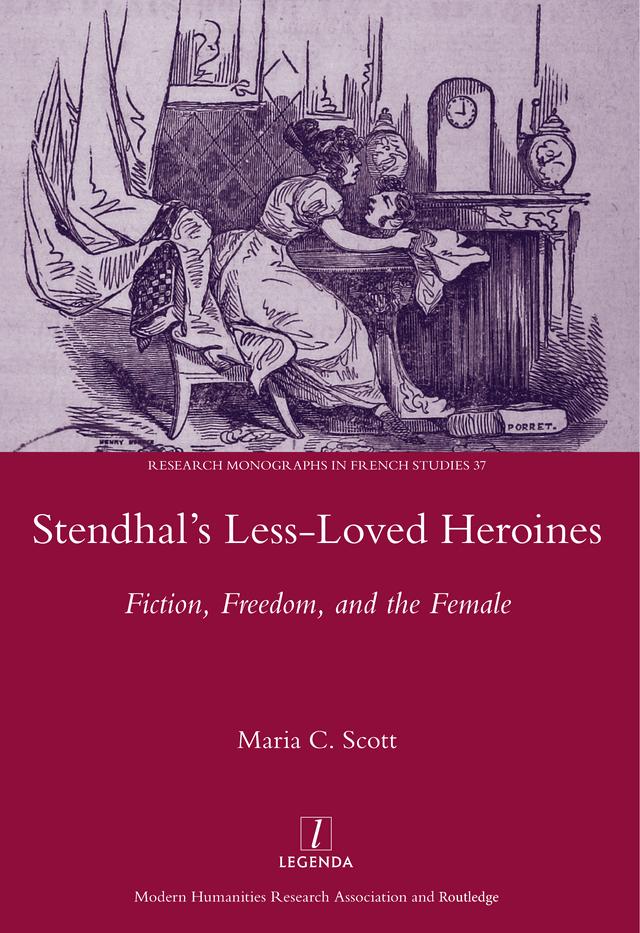
"Stendhal's most independent heroines are usually disliked or marginalized by critics. However, when gender-neutral criteria are applied, Mina de Vanghel, Vanina Vanini, Mathilde de La Mole, and Lamiel can all be shown to enact extraordinary experiments in freedom. These experiments are all the more remarkable in view of the gender of their agents, the historical situation of the author (1783-1842), and the conventions of the literary movement that his fiction helped to found: realism. Simone de Beauvoir's 1949 study of Stendhal's heroines gives preference to the reserved females over his Amazons. But existentialism, as a philosophy of freedom, also enables a reading of the self-determining heroines that acknowledges the superiority of their choices: their resistance and counter-plots, their paradoxical authenticity, their rejection of seriousness, and their assumption of responsibility for the routes they plot."
Betaal eenvoudig met kaart, Klarna, Apple Pay of Google Pay. Niet tevreden? Je hebt altijd 14 dagen bedenktijd. Lees meer in onze voorwaarden. Heb je vragen, mail ons dan via hello@memmo.org.
Memmo maakt studeren makkelijker – waar je ook bent ter wereld. Wij brengen je cursusboeken en slimme studietools samen op één plek: samenvattingen, quizzen, podcasts en flashcards. En Ted, je studievriend die antwoord geeft op alles wat je je afvraagt. Meer dan 50.000 studenten studeren hier al – gebouwd om je sneller te laten leren en minder stress te geven.
Misschien vind je dit ook leuk
Koop het boek0