
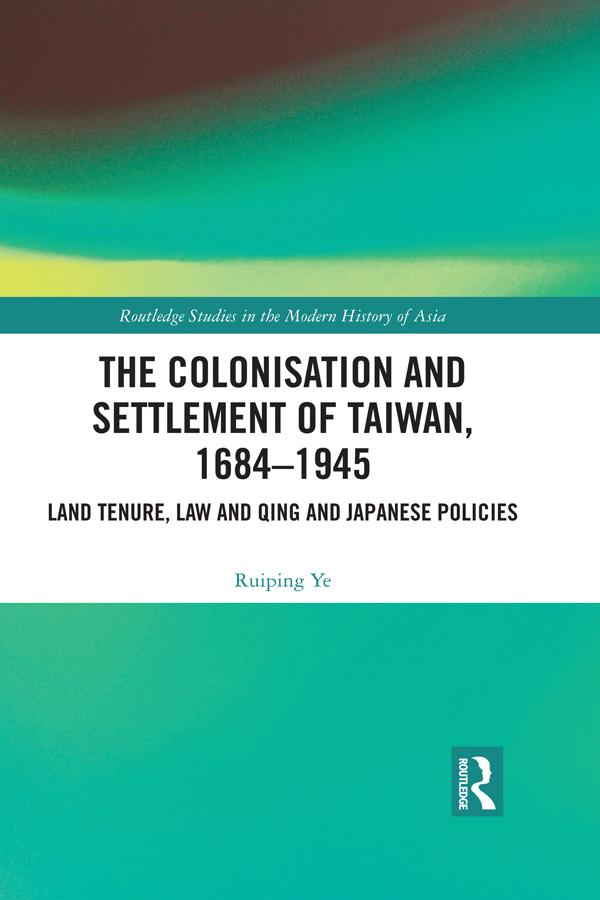
The dispossession of indigenous peoples by conquest regimes remains a pressing issue. This book, unlike most other books on the subject, contrasts two different colonial administrations – first the Chinese Qing Empire, then, from 1895, the Japanese. It shows how, under the Chinese legal system, the Qing employed the Chinese legal system to manage the relationship between the increasing numbers of Han Chinese settlers and the indigenous peoples, and how, although the Qing regime refrained from taking actions to transform aboriginal land tenure, nevertheless Chinese settlers were able to manipulate aboriginal land tenure to their advantage. It goes on to examine the very different approach of the Japanese colonial administration, which following the Meiji Restoration of 1868 had begun to adopt a Western legal framework, demonstrating how this was intentionally much more intrusive, and how the Japanese modernized legal framework significantly disrupted aboriginal land tenure. Based on extensive original research, the book provides important insights into colonisation, different legal traditions and the impact of colonial settlement on indigenous peoples.
Betaal eenvoudig met kaart, Klarna, Apple Pay of Google Pay. Niet tevreden? Je hebt altijd 14 dagen bedenktijd. Lees meer in onze voorwaarden. Heb je vragen, mail ons dan via hello@memmo.org.
Memmo maakt studeren makkelijker – waar je ook bent ter wereld. Wij brengen je cursusboeken en slimme studietools samen op één plek: samenvattingen, quizzen, podcasts en flashcards. En Ted, je studievriend die antwoord geeft op alles wat je je afvraagt. Meer dan 50.000 studenten studeren hier al – gebouwd om je sneller te laten leren en minder stress te geven.