
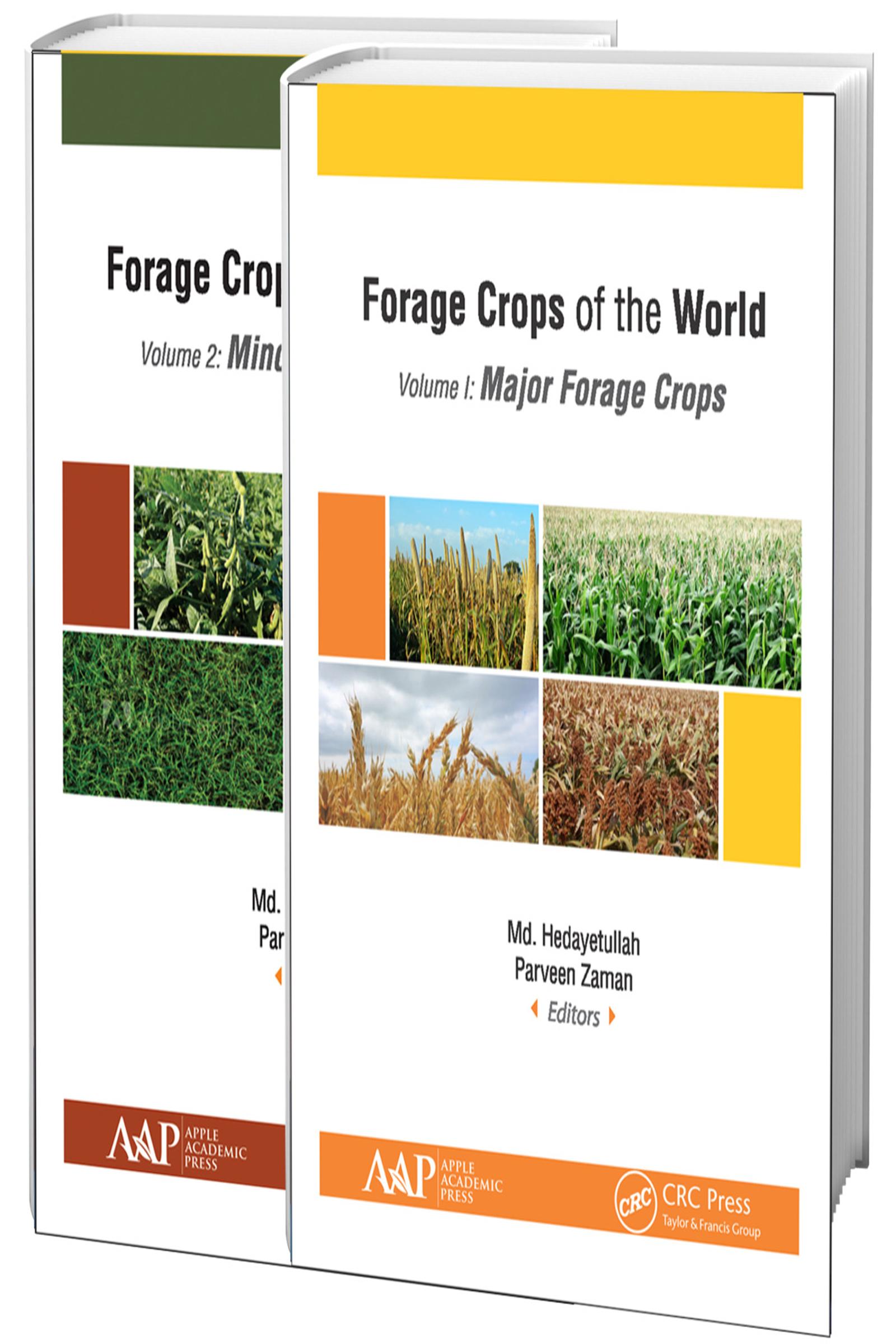
This new 2-volume set discusses the importance of fodder production of the minor fodder crops for animals. The volumes focuses on fodder production for forage crops, cover 17 major forage crops and 25 minor forage crops. The volumes discuss crop production methodology and agronomic management in a systemic way, providing an abundance of information on each type of forage crop discussed, including preferred soil type, land capability, cropping patterns, climate, and socioeconomic conditions. They also address pests of the various forage crops, disease management, agroforestry in fodder and forage crops, preservation of forage crops, and forage production and climate change.
Forage crops are very essential for quality milk and meat production. Farm animals are normally fed fodder available from cultivated areas, supplemented by a small extent with harvested grasses and top feeds. The three major sources of fodder are crop residues, cultivated fodder, and fodder from trees, pastures, and grazing lands. The patterns and types of fodder crops vary by geographical location.
Betaal eenvoudig met kaart, Klarna, Apple Pay of Google Pay. Niet tevreden? Je hebt altijd 14 dagen bedenktijd. Lees meer in onze voorwaarden. Heb je vragen, mail ons dan via hello@memmo.org.
Memmo maakt studeren makkelijker – waar je ook bent ter wereld. Wij brengen je cursusboeken en slimme studietools samen op één plek: samenvattingen, quizzen, podcasts en flashcards. En Ted, je studievriend die antwoord geeft op alles wat je je afvraagt. Meer dan 50.000 studenten studeren hier al – gebouwd om je sneller te laten leren en minder stress te geven.