
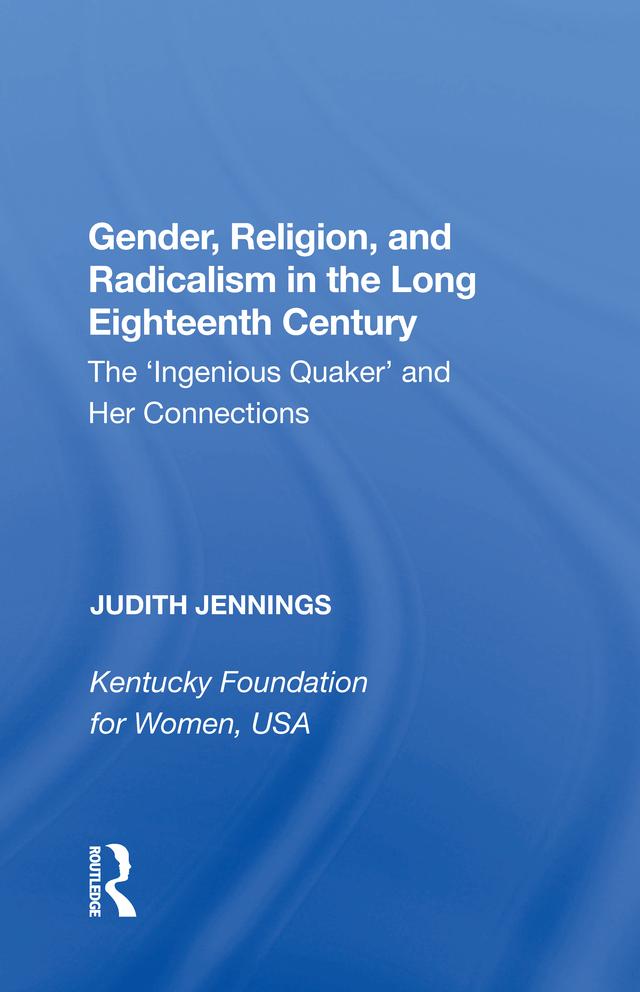
Through analysis of the life and writings of eighteenth-century Quaker artist and author Mary Knowles, Judith Jennings uncovers concrete but complex examples of how gender functioned in family, social, and public contexts during the Georgian Age. Knowles's story, including her bold confrontation of Samuel Johnson and public dispute with James Boswell, serves as a lens through which to view larger connections, such as the social transformation of English Quakers, changing concepts of gender and the transmission of radical political ideology during the era of the American and French revolutions. Further, Jennings offers a more nuanced view of the participation of "middling" women in radical politics through an examination of Knowles's theological beliefs, social networks and political opinions at a time when the American and French Revolutions reshaped political ideology. By analyzing Mary Knowles's connections-both male and female-Jennings contributes new understanding about how sociability operated, encompassing women and men of various faiths and ethnic origins.
Betaal eenvoudig met kaart, Klarna, Apple Pay of Google Pay. Niet tevreden? Je hebt altijd 14 dagen bedenktijd. Lees meer in onze voorwaarden. Heb je vragen, mail ons dan via hello@memmo.org.
Memmo maakt studeren makkelijker – waar je ook bent ter wereld. Wij brengen je cursusboeken en slimme studietools samen op één plek: samenvattingen, quizzen, podcasts en flashcards. En Ted, je studievriend die antwoord geeft op alles wat je je afvraagt. Meer dan 50.000 studenten studeren hier al – gebouwd om je sneller te laten leren en minder stress te geven.
Misschien vind je dit ook leuk
Koop het boek0