
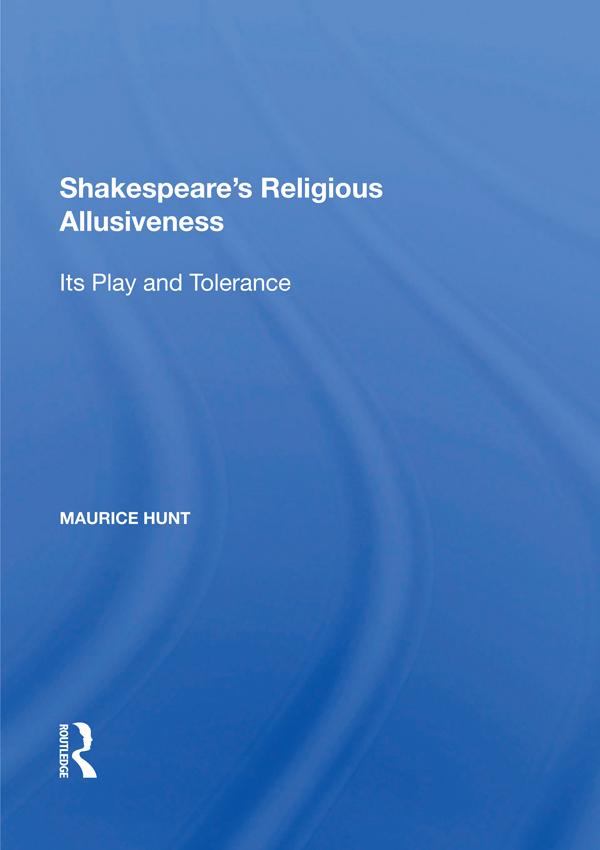
Shakespeare's Religious Allusiveness complicates debates about whether Shakespeare's plays are fundamentally Protestant or Catholic in sympathy, challenging analyses that either find Protestant elements consistently undercutting Catholic motifs or, less often, discover evidence of the playwright's endorsement of Catholic doctrine and customs. Rather, Maurice Hunt argues that Shakespeare's syncretistic method of incorporating both Protestant and Catholic elements into his plays was singular among early modern English playwrights at a time when governmental and social tolerance of Protestantism in the theatre was high and criticism of stereotyped Catholicism was correspondingly rampant in drama. In-depth discussions of The Two Gentlemen of Verona, the Second Henriad, All's Well That Ends Well, Twelfth Night, and Othello reveal how Shakespeare allusively integrates Reformation Protestant and Roman Catholic motifs and systems of thought. This book sheds new light on the playwright's knowledge of and interest in Elizabethan and Jacobean religious debates over the nature of spiritual reformation, the efficacy of merit for redemption, and the operation of Providence. It will appeal not only to Shakespeare scholars but to those interested in the cultural history of the Reformation.
Betaal eenvoudig met kaart, Klarna, Apple Pay of Google Pay. Niet tevreden? Je hebt altijd 14 dagen bedenktijd. Lees meer in onze voorwaarden. Heb je vragen, mail ons dan via hello@memmo.org.
Memmo maakt studeren makkelijker – waar je ook bent ter wereld. Wij brengen je cursusboeken en slimme studietools samen op één plek: samenvattingen, quizzen, podcasts en flashcards. En Ted, je studievriend die antwoord geeft op alles wat je je afvraagt. Meer dan 50.000 studenten studeren hier al – gebouwd om je sneller te laten leren en minder stress te geven.
Misschien vind je dit ook leuk
Koop het boek0