
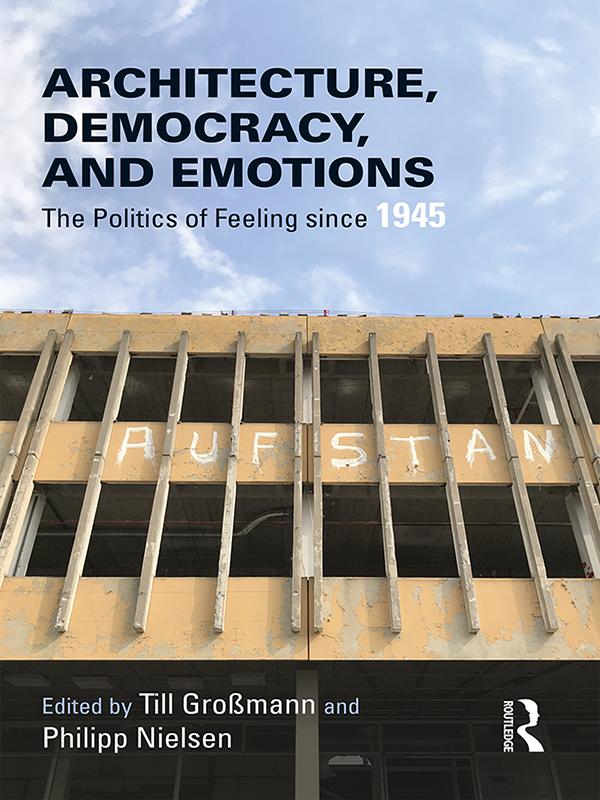
After 1945 it was not just Europe’s parliamentary buildings that promised to house democracy: hotels in Turkey and Dutch shopping malls proposed new democratic attitudes and feelings. Housing programs in the United Kingdom, the United States, and the Soviet Union were designed with the aim of creating new social relations among citizens and thus better, more equal societies. Architecture, Democracy, and Emotions focuses on these competing promises of consumer democracy, welfare democracy, and socialist democracy. Spanning from Turkey across Eastern and Western Europe to the United States, the chapters investigate the emotional politics of housing and representation during the height of the Cold War, as well as its aftermath post-1989.
The book assembles detailed research on how the claims and aspirations of being "democratic" influenced the affects of architecture, and how these claims politicized space. Architecture, Democracy, and Emotions contributes to the study of Europe’s "democratic age" beyond Cold War divisions without diminishing political differences. The combination of an emotional history of democracy with an architectural history of emotions distinguishes the book’s approach from other recent investigations into the interconnection of mind, body, and space.
Betaal eenvoudig met kaart, Klarna, Apple Pay of Google Pay. Niet tevreden? Je hebt altijd 14 dagen bedenktijd. Lees meer in onze voorwaarden. Heb je vragen, mail ons dan via hello@memmo.org.
Memmo maakt studeren makkelijker – waar je ook bent ter wereld. Wij brengen je cursusboeken en slimme studietools samen op één plek: samenvattingen, quizzen, podcasts en flashcards. En Ted, je studievriend die antwoord geeft op alles wat je je afvraagt. Meer dan 50.000 studenten studeren hier al – gebouwd om je sneller te laten leren en minder stress te geven.