
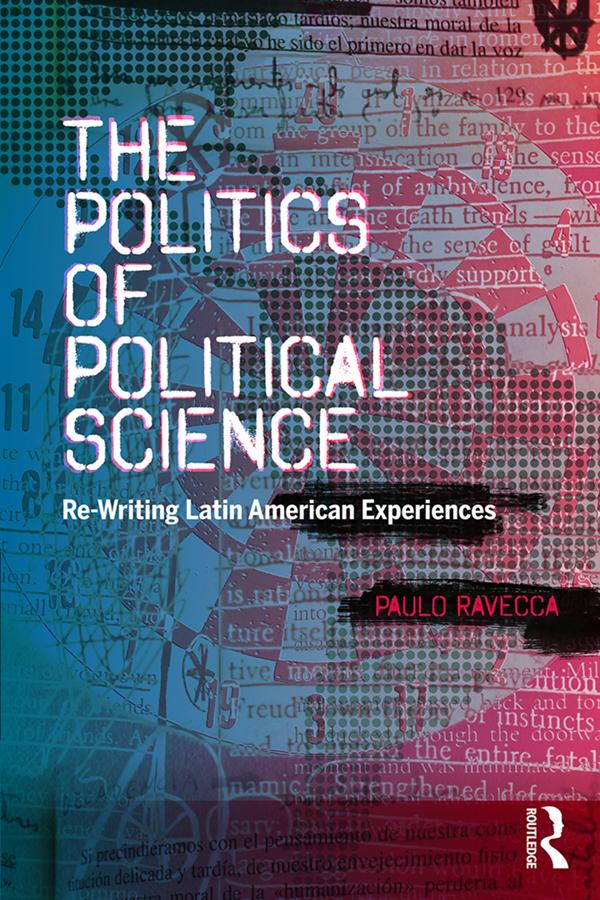
In this thought-provoking book, Paulo Ravecca presents a series of interlocking studies on the politics of political science in the Americas.
Focusing mainly on the cases of Chile and Uruguay, Ravecca employs different strands of critical theory to challenge the mainstream narrative about the development of the discipline in the region, emphasizing its ideological aspects and demonstrating how the discipline itself has been shaped by power relations. Ravecca metaphorically charts the (non-linear) transit from “cold” to “warm” to “hot” intellectual temperatures to illustrate his—alternative—narrative. Beginning with a detailed quantitative study of three regional academic journals, moving to the analysis of the role of subjectivity (and political trauma) in academia and its discourse in relation to the dictatorships in Chile and Uruguay, and arriving finally at an intimate meditation on the experience of being a queer scholar in the Latin American academy of the 21st century, Ravecca guides his readers through differing explorations, languages, and methods.
The Politics of Political Science: Re-Writing Latin American Experiences offers an essential reflection on both the relationship between knowledges and politics and the political and ethical role of the scholar today, demonstrating how the study of the politics of knowledge deepens our understanding of the politics of our times.
Betaal eenvoudig met kaart, Klarna, Apple Pay of Google Pay. Niet tevreden? Je hebt altijd 14 dagen bedenktijd. Lees meer in onze voorwaarden. Heb je vragen, mail ons dan via hello@memmo.org.
Memmo maakt studeren makkelijker – waar je ook bent ter wereld. Wij brengen je cursusboeken en slimme studietools samen op één plek: samenvattingen, quizzen, podcasts en flashcards. En Ted, je studievriend die antwoord geeft op alles wat je je afvraagt. Meer dan 50.000 studenten studeren hier al – gebouwd om je sneller te laten leren en minder stress te geven.