
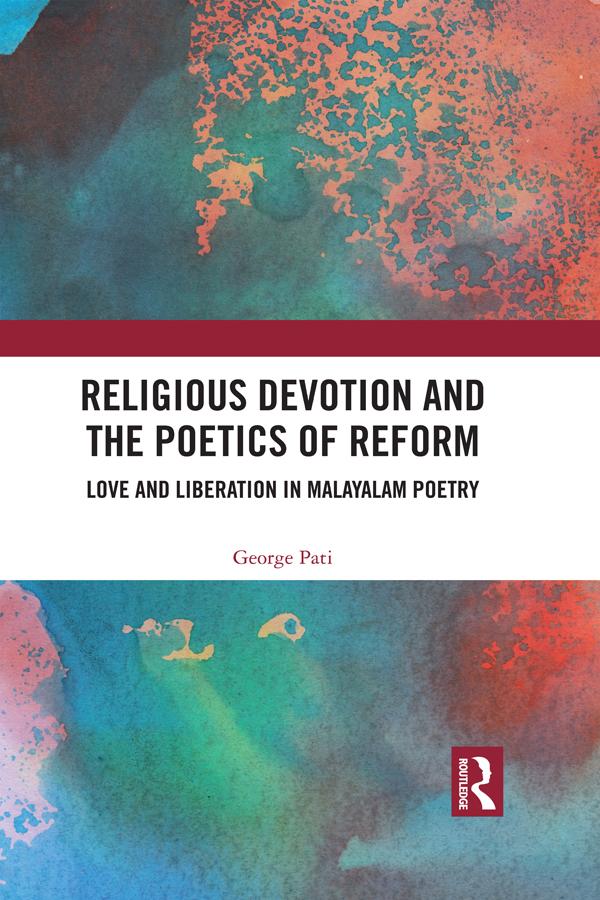
The poetry emanating from the bhakti tradition of devotional love in India has been both a religious expression and a form of resistance to hierarchies of caste, gender, and colonialism. Some scholars have read this art form through the lens of resistance and reform, but others have responded that imposing an interpretive framework on these poems fails to appreciate their authentic expressions of devotion. This book argues that these declarations of love and piety can simultaneously represent efforts towards emancipation at the spiritual, political, and social level.
This book, through a close study of Naḷini (1911), a Malayalam lyric poem, as well as other poems, authored by Mahākavi Kumāran Āśān (1873–1924), a low-caste Kerala poet, demonstrates how Āśān employed a theme of love among humans during the modern period in Kerala that was grounded in the native South Indian bhakti understanding of love of the deity. Āśān believed that personal religious freedom comes from devotion to the deity, and that love for humans must emanate from love of the deity.
In showing how devotional religious expression also served as a resistance movement, this study provides new perspective on an understudied area of the colonial period. Bringing to light an under-explored medium, in both religious and artistic terms, this book will be of great interest to scholars of religious studies, Hindu studies, and religion and literature, as well as academics with an interest in Indian culture.
Betaal eenvoudig met kaart, Klarna, Apple Pay of Google Pay. Niet tevreden? Je hebt altijd 14 dagen bedenktijd. Lees meer in onze voorwaarden. Heb je vragen, mail ons dan via hello@memmo.org.
Memmo maakt studeren makkelijker – waar je ook bent ter wereld. Wij brengen je cursusboeken en slimme studietools samen op één plek: samenvattingen, quizzen, podcasts en flashcards. En Ted, je studievriend die antwoord geeft op alles wat je je afvraagt. Meer dan 50.000 studenten studeren hier al – gebouwd om je sneller te laten leren en minder stress te geven.