
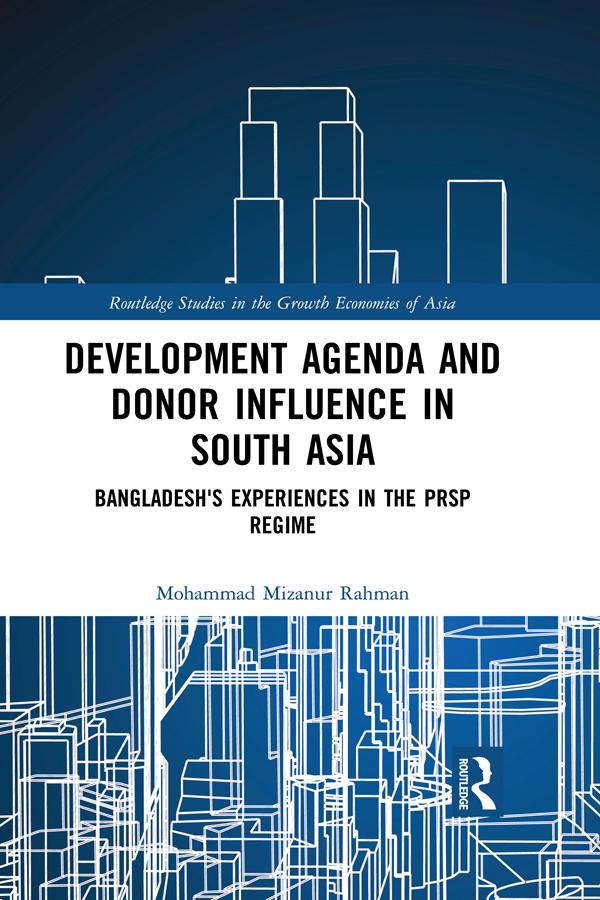
Policy ownership of development agenda emerged as an important aspect in international development cooperation during the 1990s in the wake of evident failures of reform initiatives in developing countries steered by donor agencies, particularly the international financial institutions (IFIs), the World Bank (WB) and the International Monetary Fund (IMF).
The principal focus of this book is to examine Bangladesh’s policy ownership in its PRSP by broadly analyzing the dynamics in the formulation process and examining the principal actors’ contribution to the formulation process. This book also deals with several other dimensions of foreign aid and its changing features including the shifts in WB-IMF’s approach to development cooperation. This book argues that the WB-IMF strongly influence Bangladesh’s development strategies and agendas and in general the WB-IMF have not changed much in their aid relationship despite clear limitations of their previous reform models. Building on Bangladesh’s current level of development the book advocates that Bangladesh needs to adopt a new model for development agenda setting.
Illustrating the influences of donor communities on the creation of development strategies in developing countries, this book presents a macro dynamics of the political economy of international development cooperation. It will be of interest to academics and professionals working on political economy, governance, public policy and development cooperation as well as South Asian Studies.
Betaal eenvoudig met kaart, Klarna, Apple Pay of Google Pay. Niet tevreden? Je hebt altijd 14 dagen bedenktijd. Lees meer in onze voorwaarden. Heb je vragen, mail ons dan via hello@memmo.org.
Memmo maakt studeren makkelijker – waar je ook bent ter wereld. Wij brengen je cursusboeken en slimme studietools samen op één plek: samenvattingen, quizzen, podcasts en flashcards. En Ted, je studievriend die antwoord geeft op alles wat je je afvraagt. Meer dan 50.000 studenten studeren hier al – gebouwd om je sneller te laten leren en minder stress te geven.