
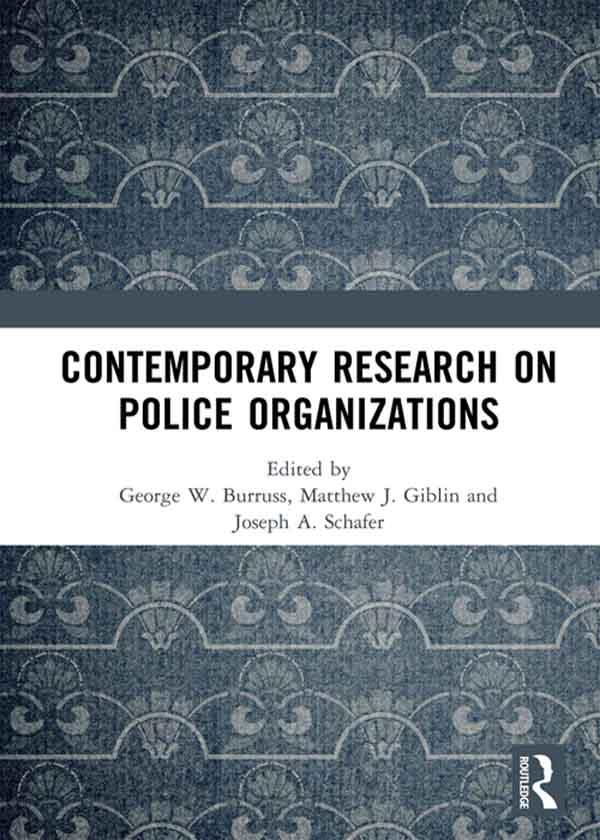
Much research on policing focuses on individual officer decision making in the field, but officers are positioned within organizations. Organizational characteristics, including structures, policies, management, training, culture, traditions, and the environmental context affect individual officer behavior and attitudes. Recent high-profile controversies surrounding policing have generated interest in examining what factors may have led to current crises.
In this book, contributors discuss how police department priorities are made; how departments respond to sexual assault complaints; how forensic scientists deal with job stress and satisfaction; how police use gun crime incident reviews for problem solving and information sharing; how police officers view the use of body-worn cameras given their perceptions of organizational justice; and how officers view their work culture. The purpose of this book is to give policy makers and scholars some guidance on the interplay between the individual and the organization. By understanding this dynamic, police administrators should be able to better devise reform efforts. This book was originally published as a special issue of the Journal of Crime and Justice.
Betaal eenvoudig met kaart, Klarna, Apple Pay of Google Pay. Niet tevreden? Je hebt altijd 14 dagen bedenktijd. Lees meer in onze voorwaarden. Heb je vragen, mail ons dan via hello@memmo.org.
Memmo maakt studeren makkelijker – waar je ook bent ter wereld. Wij brengen je cursusboeken en slimme studietools samen op één plek: samenvattingen, quizzen, podcasts en flashcards. En Ted, je studievriend die antwoord geeft op alles wat je je afvraagt. Meer dan 50.000 studenten studeren hier al – gebouwd om je sneller te laten leren en minder stress te geven.