
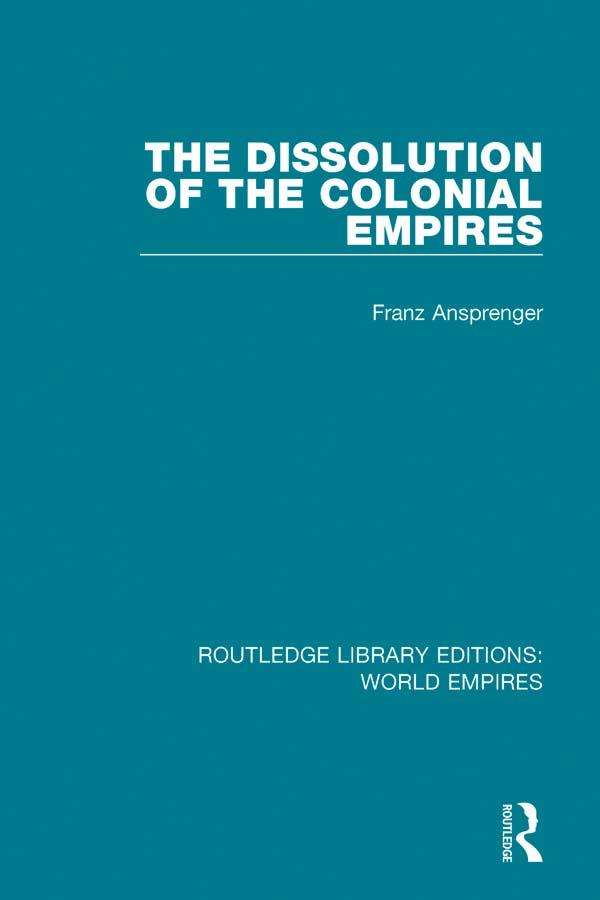
First published in 1989. On the eve of the First World War, almost 72 million square kilometres of territory and more than 560 million people were under colonial rule. By 1980 the European colonial empires had disappeared from the map. Concentrating in particular on the British Commonwealth and the French colonial empire, the author shows how economic and political changes in the mother countries, the awakening national consciousness of the African and Asian peoples, and the effects of two World Wars had all compelled Europe to decolonize. He argues that although a satisfactory new order in world politics and the global economy has not been achieved in the process, the dissolution of the empires came about with remarkably little bloodshed, thereby laying a solid foundation for the future.
The author concludes by looking at the legacy of the decolonized world in the late 1980s. He examines the last bastion of European colonial domination (South Africa) and discusses the emerging new North-South relations.
Betaal eenvoudig met kaart, Klarna, Apple Pay of Google Pay. Niet tevreden? Je hebt altijd 14 dagen bedenktijd. Lees meer in onze voorwaarden. Heb je vragen, mail ons dan via hello@memmo.org.
Memmo maakt studeren makkelijker – waar je ook bent ter wereld. Wij brengen je cursusboeken en slimme studietools samen op één plek: samenvattingen, quizzen, podcasts en flashcards. En Ted, je studievriend die antwoord geeft op alles wat je je afvraagt. Meer dan 50.000 studenten studeren hier al – gebouwd om je sneller te laten leren en minder stress te geven.