
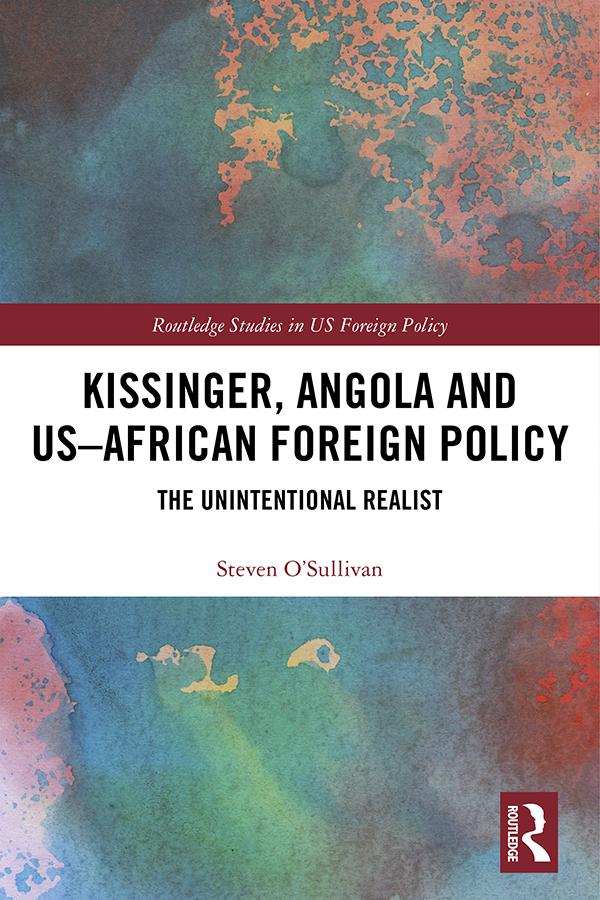
Analysing US foreign policy towards Angola during the Ford administration, this book provides an intriguing insight into one of the most avoidable and unfortunate episodes in Cold War history and explores the impact on Henry Kissinger’s much vaunted reputation for being guided by realist principles.
Kissinger has dominated political discourse and scholarship on US foreign policy since the 1970s, but although his legacy continues to generate controversy, little attention has been paid to the influence of Vietnam’s collapse on the US decision to covertly intervene in the Angolan civil war. This book argues that Kissinger’s concern for personal reputation and US credibility following the collapse of Vietnam led to a harmful and unrealistic policy toward Angola. Exposure of US covert intervention exacerbated domestic and international political tensions and the subsequent showdown between the excutive and legislative branches ironically resulted in Kissinger proclaiming a new departure in US–African relations. Thus, it is argued that Kissinger was an ‘unintentional realist’ rather than an intellectual proponent of realpolitik.
Enhancing our understanding of Kissinger, his relationship with his subordinates and with Congress, and his approach to foreign policy, this book will be of interest to scholars of Cold War history, US foreign policy and all those fascinated by the personality of Henry Kissinger.
Betaal eenvoudig met kaart, Klarna, Apple Pay of Google Pay. Niet tevreden? Je hebt altijd 14 dagen bedenktijd. Lees meer in onze voorwaarden. Heb je vragen, mail ons dan via hello@memmo.org.
Memmo maakt studeren makkelijker – waar je ook bent ter wereld. Wij brengen je cursusboeken en slimme studietools samen op één plek: samenvattingen, quizzen, podcasts en flashcards. En Ted, je studievriend die antwoord geeft op alles wat je je afvraagt. Meer dan 50.000 studenten studeren hier al – gebouwd om je sneller te laten leren en minder stress te geven.