
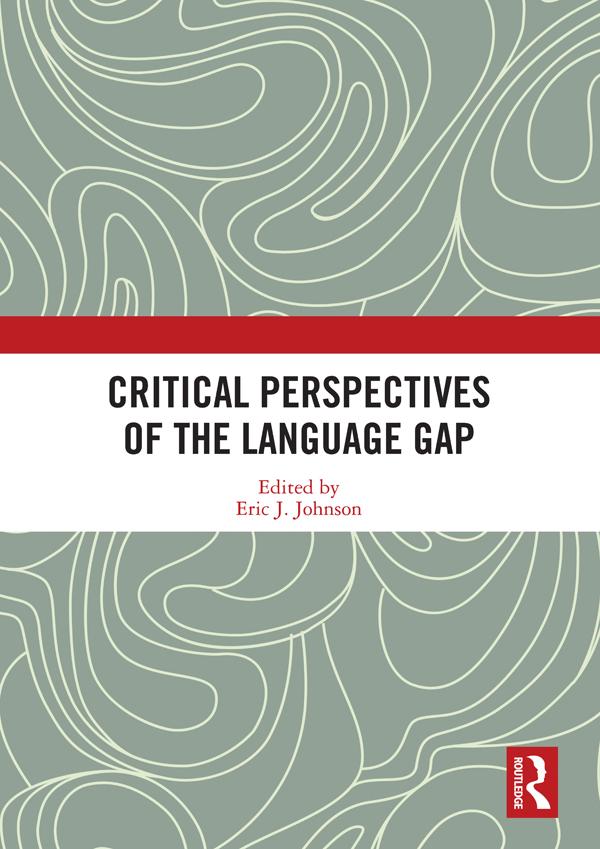
This volume is an orchestrated critique of the notion that individuals from lower socioeconomic status communities have inferior language skills as compared to middle- and upper-class groups. The idea of this so-called “language gap” stems in large part from Hart and Risley’s (1995) publication Meaningful Differences in the Everyday Experience of Young American Children. Hart and Risley proposed that by age 3, children from more economically affluent households were exposed to approximately 30 million more words than children from low-income backgrounds. They also claimed that this gap in exposure to words negatively impacts cognitive development and eventual academic achievement. The contributing authors in this book contest the original concept of a “language-gap” as well as the recent swell of academic research and public programs that it has produced. The chapters interrogate the linguistic, academic, cultural, and social implications of the “language-gap” by providing critical accounts grounded in the scholarly disciplines of sociolinguistics, anthropology, and education.
This book was originally published as a special issue of the International Multilingual Research Journal.
Betaal eenvoudig met kaart, Klarna, Apple Pay of Google Pay. Niet tevreden? Je hebt altijd 14 dagen bedenktijd. Lees meer in onze voorwaarden. Heb je vragen, mail ons dan via hello@memmo.org.
Memmo maakt studeren makkelijker – waar je ook bent ter wereld. Wij brengen je cursusboeken en slimme studietools samen op één plek: samenvattingen, quizzen, podcasts en flashcards. En Ted, je studievriend die antwoord geeft op alles wat je je afvraagt. Meer dan 50.000 studenten studeren hier al – gebouwd om je sneller te laten leren en minder stress te geven.