
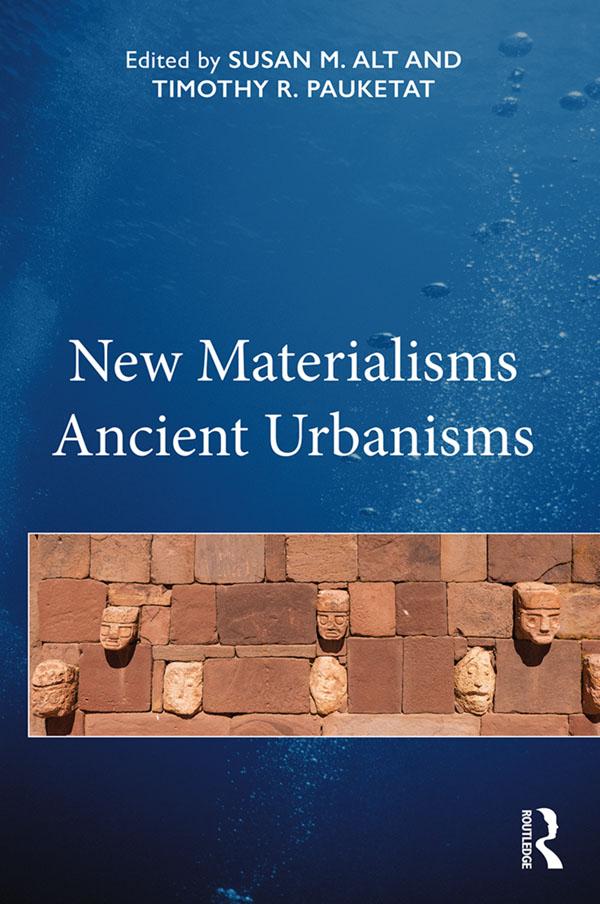
The future of humanity is urban, and knowledge of urbanism’s deep past is critical for us all to navigate that future. The time has come for archaeologists to rethink this global phenomenon by asking what urbanism is and, more to the point, was. Can we truly understand ancient urbanism by only asking after the human element, or are the properties and qualities of landscapes, materials, and atmospheres equally causal?
The nine authors of New Materialisms Ancient Urbanisms seek less anthropocentric answers to questions about the historical relationships between urbanism and humanity in Africa, Asia, and the Americas. They analyze the movements and flows of materials, things, phenomena, and beings—human and otherwise—as these were assembled to produce the kinds of complex, dense, and stratified relationships that we today label urban. In so doing, the book emerges as a work of both theory and historical anthropology. It breaks new ground in the archaeology of urbanism, building on the latest ‘New Materialist’, ‘relational-ontological’, and ‘realist’ trends in social theory.
This book challenges a new generation of students to think outside the box, and provides scholars of urbanism, archaeology, and anthropology with a fresh perspective on the development of urban society.
Betaal eenvoudig met kaart, Klarna, Apple Pay of Google Pay. Niet tevreden? Je hebt altijd 14 dagen bedenktijd. Lees meer in onze voorwaarden. Heb je vragen, mail ons dan via hello@memmo.org.
Memmo maakt studeren makkelijker – waar je ook bent ter wereld. Wij brengen je cursusboeken en slimme studietools samen op één plek: samenvattingen, quizzen, podcasts en flashcards. En Ted, je studievriend die antwoord geeft op alles wat je je afvraagt. Meer dan 50.000 studenten studeren hier al – gebouwd om je sneller te laten leren en minder stress te geven.