
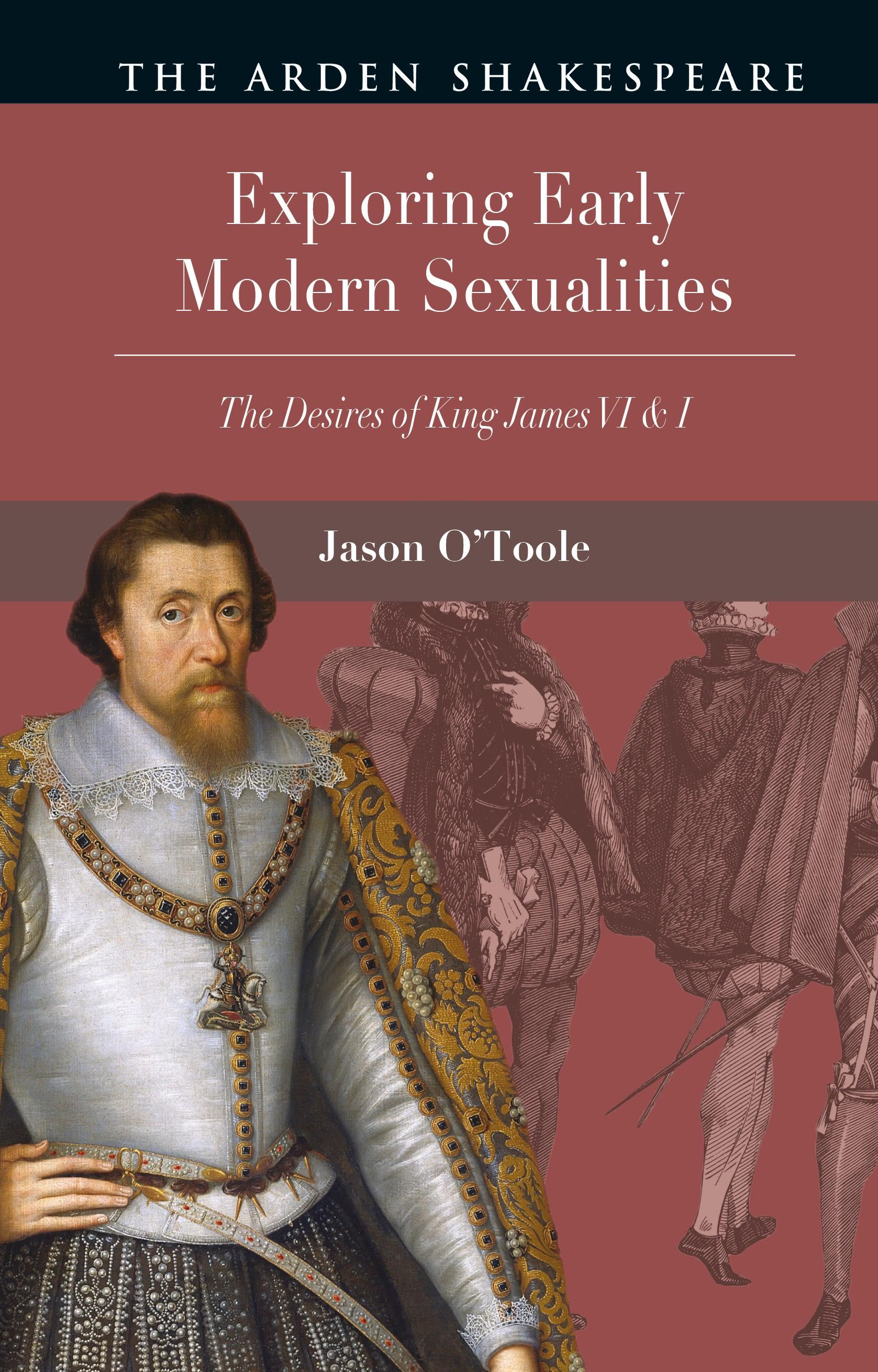
How might we understand early modern sexuality prior to contemporary interpretations of sexuality? What does the sex life of James VI and I tell us about the history of sexuality?
Jason O'Toole explores the network of intimacy which structured itself around King James VI and I, his wife Anna of Denmark and James' prominent as well as ancillary favourites to provide answers to these questions. O'Toole presents a cultural and literary history of homoerotic desire by analysing the politics and texture of queer culture at the Jacobean court.
To uncover this history, he investigates how physical manifestations of desire reveal themselves through intimacy between physical bodies and through the handling, employment and exchange of material bodies and objects. Objects which simultaneously represent accepted and forbidden desire. Highlighting how same-sex desire was often concealed, O'Toole evaluates how literary works from the period communicate an unnamed desire between men through metaphor, allegories and Classical allusions. Primary texts including poems, masques, and unpublished manuscripts, recurrent tropes, material culture such as artistic artefacts and architectural design are analysed to unpack sexual double meanings and demonstrate how homoeroticism acts as a regular and accessible subtext. This focus illustrates how homoerotic and homosocial desire were both interwoven and normative in the courts of King James VI & I, foregrounding the social, cultural and political importance of same-sex desire in the early modern period.
Jason O'Toole explores the network of intimacy which structured itself around King James VI and I, his wife Anna of Denmark and James' prominent as well as ancillary favourites to provide answers to these questions. O'Toole presents a cultural and literary history of homoerotic desire by analysing the politics and texture of queer culture at the Jacobean court.
To uncover this history, he investigates how physical manifestations of desire reveal themselves through intimacy between physical bodies and through the handling, employment and exchange of material bodies and objects. Objects which simultaneously represent accepted and forbidden desire. Highlighting how same-sex desire was often concealed, O'Toole evaluates how literary works from the period communicate an unnamed desire between men through metaphor, allegories and Classical allusions. Primary texts including poems, masques, and unpublished manuscripts, recurrent tropes, material culture such as artistic artefacts and architectural design are analysed to unpack sexual double meanings and demonstrate how homoeroticism acts as a regular and accessible subtext. This focus illustrates how homoerotic and homosocial desire were both interwoven and normative in the courts of King James VI & I, foregrounding the social, cultural and political importance of same-sex desire in the early modern period.
Betaal eenvoudig met kaart, Klarna, Apple Pay of Google Pay. Niet tevreden? Je hebt altijd 14 dagen bedenktijd. Lees meer in onze voorwaarden. Heb je vragen, mail ons dan via hello@memmo.org.
Memmo maakt studeren makkelijker – waar je ook bent ter wereld. Wij brengen je cursusboeken en slimme studietools samen op één plek: samenvattingen, quizzen, podcasts en flashcards. En Ted, je studievriend die antwoord geeft op alles wat je je afvraagt. Meer dan 50.000 studenten studeren hier al – gebouwd om je sneller te laten leren en minder stress te geven.